Written by
Jannah Jamil

The complexities of soft skills training
Soft skills are vital for personal and professional growth. But unlike hard skills, they resist easy measurement and application.
Three obstacles make developing and monitoring them a formidable task.
Harder to measure. Unlike hard skills training, like safety and compliance, the impact of soft skills is not quantifiable. Their effectiveness shows up in subtleties, such as improved teamwork dynamics or sharper communication, none of which a simple numerical scale can capture.
Indirect influence. Soft skills depend on intangible factors: individual personality, work environment, team dynamics, and organisational culture. That makes their direct influence hard to isolate.
Longer time frame. Soft skills need extended practice and ongoing reinforcement. Hard skills can be applied to a task immediately; soft skills must be refined until they become ingrained behaviours.
What are the critical foundations for setting up organisational learning that produces measurable results?
Organisational learning that produces results requires four non-negotiable foundations: senior leadership commitment that goes beyond sign-off to active participation, a safe learning culture where mistakes and questions are genuinely welcomed, a clear and demonstrable link between every learning initiative and a strategic business objective, and a measurement framework designed before the training — not as an afterthought.
What foundational elements does an organisation need before its L&D function can drive measurable results?
Four elements must be in place before L&D can succeed:
Leadership sponsorship — a senior executive who actively champions learning, allocates budget, and holds managers accountable for reinforcement.
A clear learning strategy aligned to business goals, not a collection of one-off courses requested by different departments.
A measurement framework that tracks not just completion rates but behavioural application and business impact.
Manager enablement — training and tools for managers to become learning coaches who set pre-training expectations and run post-training check-ins.
Without these four foundations, even well-designed training fails to produce sustained behaviour change.
A three-year comparison: pre and post-pandemic data trends
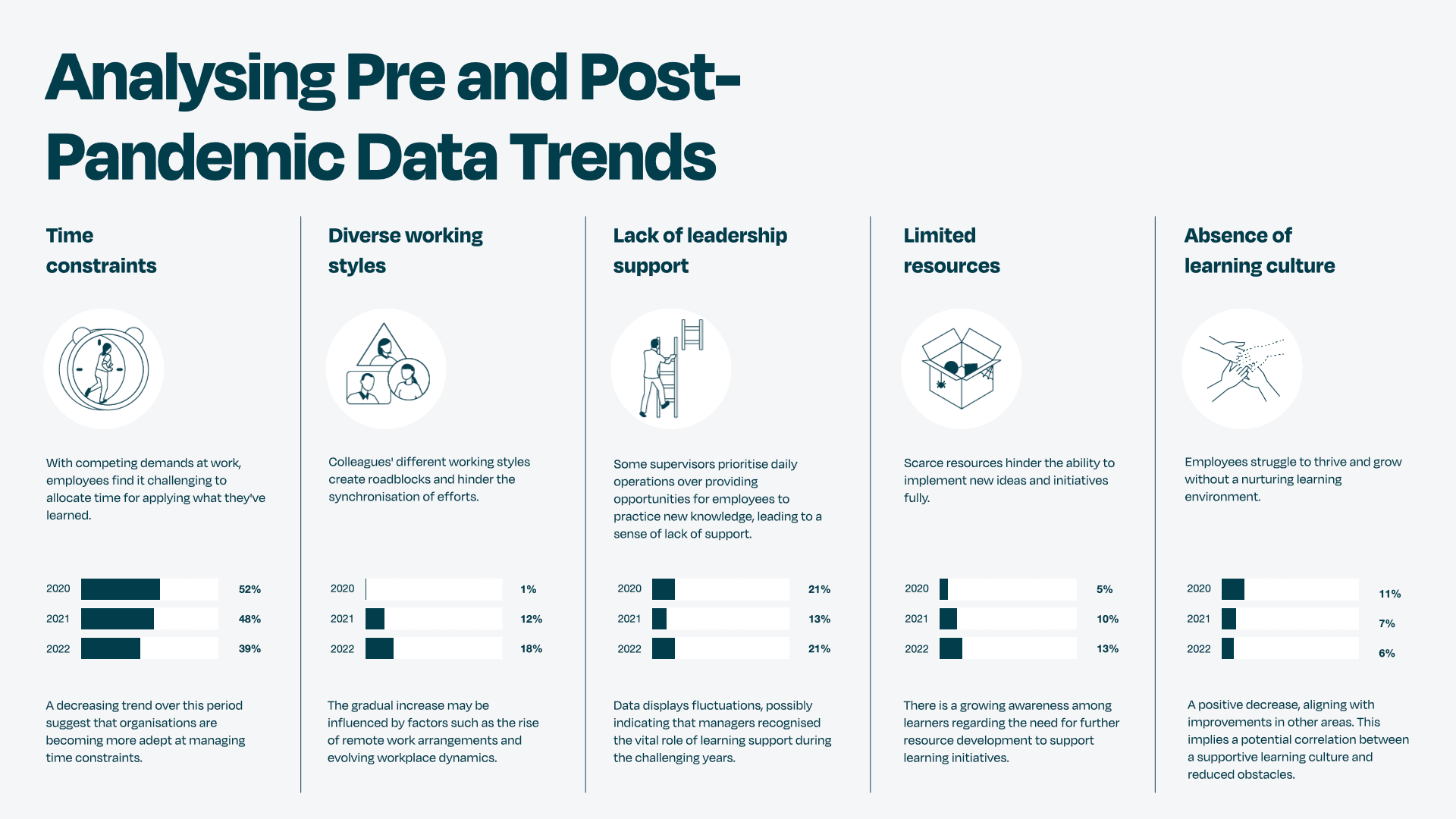
Feedback from our past learners reveals the most common roadblocks that stop knowledge from transferring from the workshop into the workplace.
During the pandemic, time was the major obstacle to learning. As businesses recovered, new challenges surfaced — time is no longer the only barrier, though it remains the most significant.
The encouraging news: both organisations and learners are actively trying to build a learning culture, and there has been real improvement since the pandemic. But these challenges haven't disappeared, and they still need addressing.
Disclaimer:
The data was collected from 300–500 learners who attended our workshops between 2020 and 2022.
The study includes learners from diverse backgrounds and organisations.
The participants providing feedback differed each year, which may contribute to some of the fluctuations in the data.
Unlocking your path to a successful L&D initiative
To tackle these obstacles head-on, we've put together a blog series that helps you assess your organisation's current learning practices and overcome the barriers holding them back.
Each article in the series takes one obstacle and works through its practical solutions.
Dive deeper into each core obstacle here:
An interactive checklist to guide you
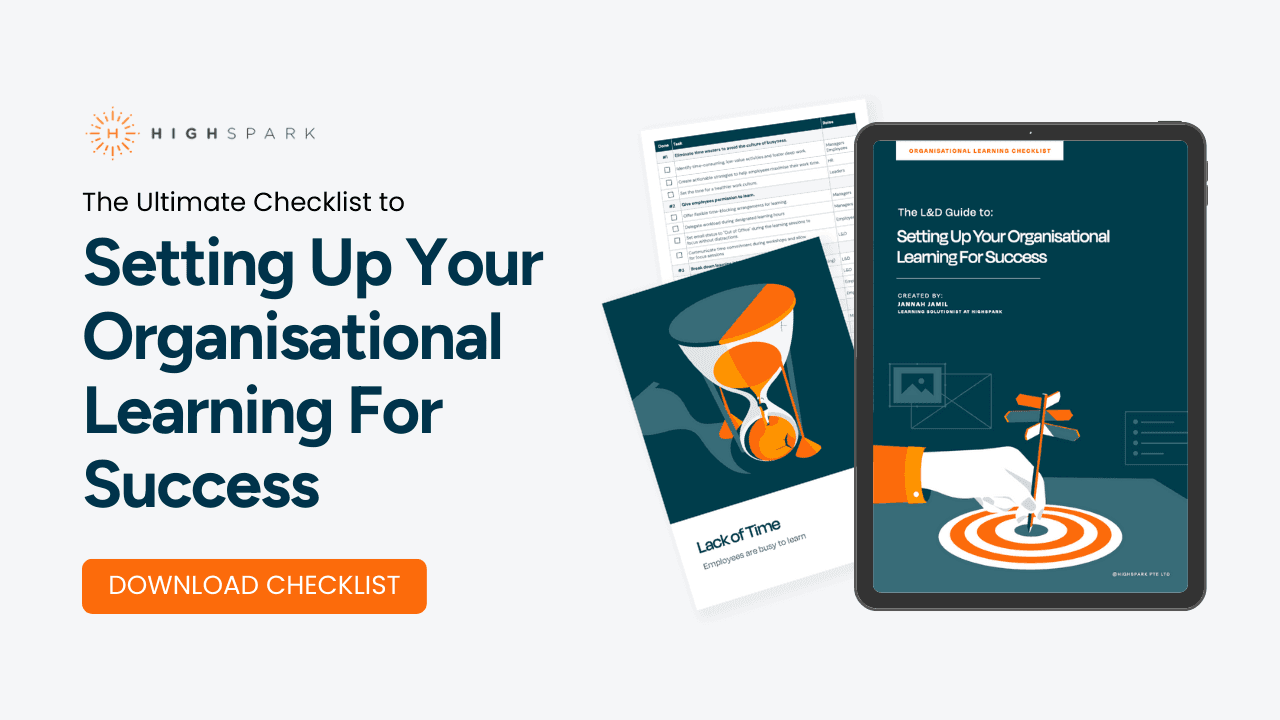
Download this checklist to hold yourself accountable as you put these strategies into practice. It breaks each blog post into concrete, actionable tasks so you can audit and revamp your current L&D initiatives.
The checklist assigns four pivotal roles for driving employee development, giving everyone clarity on how they contribute:
Employees
Managers
Leaders
HR / L&D Specialists
Use the checklist to audit your existing practices:
Flag areas where effective practices aren't yet in place.
Assign clear ownership and accountability for each obstacle.
Work with stakeholders to build and roll out strategies that strengthen your L&D initiatives.
Overcoming these obstacles isn't a wish — it's a necessity
Ignore them and you risk lost productivity, missed growth, and — eventually — losing the people you've invested in. Break down the barriers and build a thriving learning culture, and you position your organisation to win in a competitive market.
Frequently Asked Questions
How do you get leadership sponsorship for L&D initiatives?
Present a business case using the language of your executives. Map each proposed training initiative to a specific business metric: revenue growth, cost reduction, customer satisfaction, or employee retention. Use pilot data or case studies from similar organisations to project ROI. Avoid L&D jargon like "pedagogy" or "constructivism."
What should an L&D strategy document include?
It should include: the business goals the strategy supports, the priority audience segments, the core capabilities to be developed, the learning modalities to be used (classroom, digital, on-the-job, coaching), the measurement framework, and a 12 to 18 month roadmap. Keep it to 5 pages maximum.
How do you build a learning culture without a large budget?
Start with low-cost, high-impact initiatives: lunch-and-learn sessions led by internal experts, a shared reading list with discussion groups, peer coaching circles, and a simple internal knowledge base where employees document best practices. Culture building is about consistency and visibility, not spending.



Ready to put this into practice?
HighSpark's training programmes, trusted by 15,000+ professionals.
Explore Training