








Reinforce Your Key Message with Rhetorical Devices
Contents (17)
You've prepared everything you can to create an impressive presentation. You found the perfect topic, conducted thorough research, understood your audience demographics. You practised until you calmed your nerves and stage fright so you can perform your best on stage.
But there's a problem. Almost every other speaker is doing the same.
Have you ever wondered what you can do to stand out from your competitors? The answer is none other than rhetorical devices.
As cliché as it might sound, rhetorical devices are the art of language. They make your presentation much more memorable and engaging for the audience, and they will definitely grab their attention.
Which rhetorical devices are most effective for reinforcing a key message in a persuasive presentation?
The most powerful rhetorical devices for presentations are: Anaphora (repeating a key phrase at the start of consecutive sentences: "I have a dream…"), Tricolon (grouping ideas in threes for memorable rhythm), Antithesis (contrasting opposing ideas in one sentence), and Rhetorical questions (which activate the audience's own internal voice). Used alongside a clearly repeated central message, these devices transform a forgettable talk into one that changes minds.
How can speakers use rhetorical devices to make their key message more memorable and persuasive?
Rhetorical devices work because they create patterns that the human brain finds pleasing and memorable. The most effective for presentations are:
Anaphora: repeating the same phrase at the start of successive sentences (e.g. "We need leaders who inspire. We need leaders who listen. We need leaders who act.").
The Rule of Three: presenting ideas in groups of three, which feels naturally complete and satisfying.
Contrast: pairing opposing ideas to create clarity ("Not just different, better").
Rhetorical Questions: asking a question the audience answers silently in their heads, creating engagement without requiring a verbal response.
Use one device per key point to reinforce without overwhelming.
In this article, we have prepared a list of rhetorical devices that you can incorporate so that your presentations can have that edge:
1. Rhetorical questions

Rhetorical questions lay emphasis on certain points of the presentation. Even though the answer may be obvious, no response is expected from the audience.
I'm certain many of you have subconsciously used the phrase "Who cares?" when speaking. It sounds harsh, but that is the main purpose: to place extra emphasis on a point.
Many presenters use rhetorical questions at the start or end of their presentation.
If used at the beginning, it leaves the audience pondering the question and anticipating the answer afterwards. If used at the end, it often leads to a call to action from your audience.
2. Tricolon
Also known as the Rule of Three, Tricolon consists of three parallel words or phrases placed next to each other without interruption. The purpose is to add a sense of wholeness and empowerment to the presentation.
Here is an example from Abraham Lincoln: "… Government of the people, by the people, for the people, shall not perish from the earth."
Many speakers use tricolon to conclude their presentation. Another example is Mark Antony's famous speech from Shakespeare's Julius Caesar: "Friends, Romans, Countrymen. Lend me your ears."
Not only does it create a humorous effect, it also helps the audience remember the key message so they are sure to take away something from your presentation.
3. Alliteration
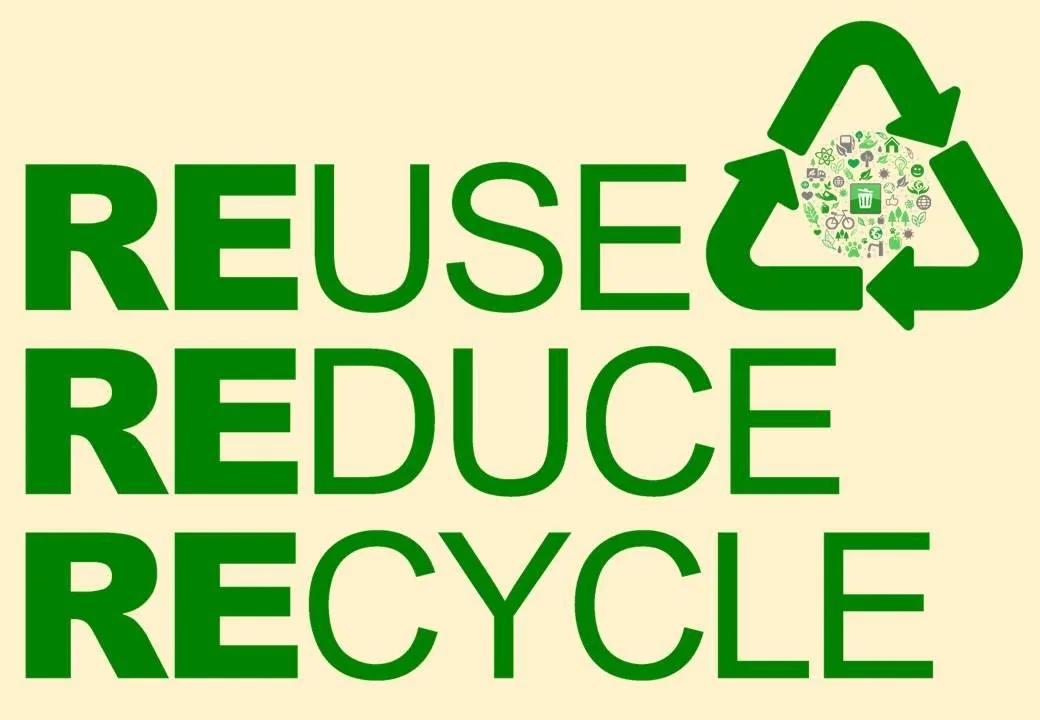
Alliteration is a stylistic literary device where a number of words with the same first consonant sound are placed close together in a sentence. It creates a musical effect that enhances the pleasure of listening and adds a poetic flow to the presentation.
For example: "Reuse, Reduce and Recycle."
Brands like Coca Cola and PayPal use alliteration in their names so they are easily remembered by consumers. This can be applied to presentations as well: alliteration makes information easier to remember because similar-sounding words attract attention and sound catchy.
Many people mistakenly think alliteration depends on starting letters. However, remember that it is the consonant sound, not the letter.
4. Anaphora
Ever heard phrases like I came, I saw, I conquered, also known as Veni, Vidi, Vici?
These phrases are known as Anaphora, the repetition of certain words or phrases at the start of a sentence to amplify key words or ideas.
Anaphora creates a huge impact in presentations. It emphasises key messages and ideas with strong emotions, and helps the audience remember content more easily through repetition that builds anticipation for what comes next.
5. Epiphora

Epiphora is the opposite of anaphora, the repetition of words or phrases at the end of a sentence instead of the start.
For example: "I want pizza, she wants pizza, we all want pizza!"
Do you feel the extra emphasis placed on "pizza"? The repetition strings words and ideas together to create a key focus point.
Using Epiphora in presentations draws the audience's attention to important points through the emphasis of repeated words.
6. Anadiplosis
Anadiplosis, meaning "reduplicate", refers to the repetition of words where the word at the end of a sentence is repeated at the beginning of the next sentence.
Here is an example from The Wanted's Glad You Came:
Turn the lights out now, now I'll take you by the hand, hand you another drink, drink it if you can, can you spend a little time, time is slipping away, away from us so stay, stay with me I can make, make you glad you came.
As seen above, this device amplifies and creates emphasis on the repeated word. The result is catchy and easily remembered by others.
Applying Anadiplosis in your presentation places emphasis on key points because people focus more on repetition. It may also differentiate you from other presenters if used appropriately.
7. Chiasmus
Anadiplosis is part of Chiasmus. Chiasmus balances two or more words against each other by reversing their structures to create an artistic effect. This gives pattern and rhythm to your presentation.
"When the going gets tough, the tough gets going."
After reading this quote, do you feel more empowered by the second half? Chiasmus tends to lay stress on the second part of the sentence. It also gives structure and adds a poetic touch, helping the audience understand and remember the point more easily, hence adding value to your presentation.
However, do not overuse it as it may confuse the audience. Consider the relationship between the two words before turning it into the device: sometimes they just would not fit.
When creating a chiasmus, refer to other examples as a template and make it your own by changing either one or both keywords.
8. Simile

A simile compares one thing to another to make a description more vivid.
You can identify a simile by the words "as" or "like" in the comparison. For example: "You were as brave as a lion" and "She slept like a log."
Similes attract the audience's attention during presentations by encouraging them to use their imagination. With the help of the comparison, the audience better understands the point you are making.
There is a common misconception that similes are just like metaphors. The truth is: similes are like metaphors, but metaphors are not like similes. This brings us to the next point.
9. Metaphor
A metaphor is a figure of speech that makes a comparison against another object which is unrelated but shares something in common. Metaphors directly state a comparison. For example: "Time is money." Time and money are unrelated, yet both are valuable.
To simplify: Sarah and Jane are best friends. They are not related to one another, but they have one thing in common: both are girls. This is what differentiates metaphors and similes: whether the words used are related. If they are not, it is a metaphor.
During presentations, metaphors engage the audience by tapping into their imagination. They transform your ideas into something the audience can relate to, making your presentation stand out from the rest.
10. Hyperbole
A hyperbole is an unreal exaggeration of ideas used to emphasise a real situation. Hyperboles are not meant to be taken literally: they exaggerate the subject for dramatic effect.
For example: "He's got tons of money." The word "ton" exaggerates the statement to emphasise how much money he has.
Hyperboles add emphasis to your key message by comparing it with something exaggerated. This develops contrast between the subjects so the audience can clearly visualise the impact.
11. Oxymoron
An oxymoron combines two opposite ideas to create an effect that leaves a lasting impression.
The most common oxymoron form is an adjective with a contrasting noun: "act natural" and "seriously funny." However, the contrasting words may also be spaced out in a sentence: "In order to lead, you must walk behind."
During presentations, oxymoron adds flavour by creating a comical and dramatic effect that makes no literal sense. The contradicting words trigger the audience's thoughts, leaving them to ponder and stay engaged throughout the presentation.
12. Personification
Personification gives human attributes to a thing, idea, or animal. These objects are represented as having the ability to act like human beings. It is a way of using storytelling to modify your speech.
An example: "The flood raged over the entire village." The word "raged" personifies the flood while symbolising its severity.
Personification gives deeper meaning to your presentations. It adds a realistic touch filled with expressions that encourages the audience to unfold a new and innovative perspective. It can also simplify a complex subject by giving it human characteristics.
Here is a video of Harry Baker incorporating personification into his slam poetry (0:43–4:01):
In his slam poetry, even though 59, 60 and 61 are just numbers, they were given human attributes.
13. Climax

There are two ways to view climax. Most people see it as the most intense and exciting part of something, usually seen in movies and stories.
For example, in The Maze Runner, when Thomas and the Gladers entered the maze searching for an escape route, some fought the grievers. Some died. Some survived.
Another interpretation: successive words, phrases or sentences arranged in ascending order of importance, creating a hierarchy. For example: "If you think that's bad, it gets worse."
Using climax in presentations builds anticipation and excitement. It keeps the audience glued to their seats, adds drama, and establishes a clear hierarchy that helps identify the key message.
14. Irony
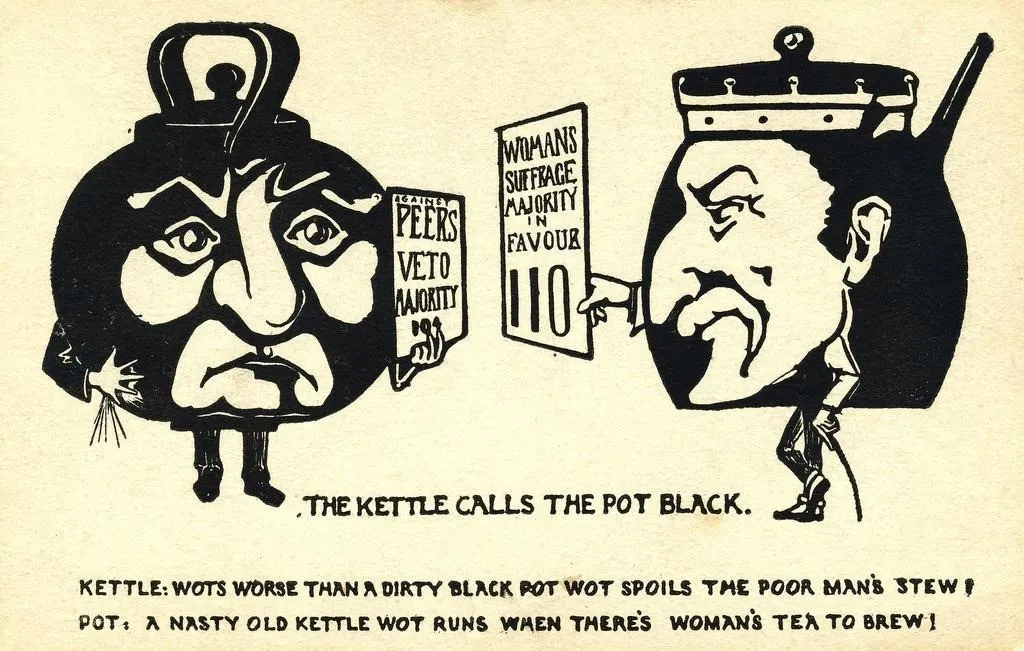
Irony is the contradiction between intended meaning and actual meaning. It may also be a situation that turns out differently from what is expected. In short, irony is the difference between appearance and reality.
A great example: "The fear of long words is called 'Hippopotomonstrosesquippedaliophobia'." The term for someone afraid of long words is, ironically, long.
Irony creates a powerful impact on your key message and presents a sort of puzzle for the audience. It can also lighten the mood because the two contradictory elements create a humorous effect.
Summing It Up
All in all, do not miss the opportunity to use any of these rhetorical devices to drive your message home. Let us know in the comments if it worked out for you!
Frequently Asked Questions
What is the most effective rhetorical device for opening a speech?
A rhetorical question is highly effective for openings because it immediately engages the audience's mind: "What if you could cut your meeting time in half without losing quality?" The audience begins answering before you continue. Follow the question immediately with your answer to create a satisfying reveal.
How do you avoid making rhetorical devices sound gimmicky?
Use them sparingly: one device per major point, and no more than three devices in an entire presentation. The device should feel natural to your speaking style and appropriate to the content. Rehearse the line until it sounds conversational, not like you are performing a technique.
What is the Rule of Three and why does it work?
The Rule of Three states that information presented in groups of three is more memorable and satisfying than other groupings. It works because three is the smallest number the brain can recognise as a pattern. Examples include "Life, liberty, and the pursuit of happiness" and "Stop, look, and listen."
Cite this article: Kai Xin Koh. Reinforce Your Key Message with Rhetorical Devices. HighSpark, 2018. https://highspark.co/blogs/reinforce-your-key-message-with-rhetorical-devices
Ready to put this into practice?
HighSpark's training programmes, trusted by 15,000+ professionals.
Explore Training