








50 Famous Persuasive Speeches You Need to Hear
Read 50 of the most famous and persuasive speeches in history, with the lines that made them land and what presenters can learn from each.

Contents (56)
Across eras of calamity and peace in our world’s history, a great many leaders, writers, politicians, theorists, scientists, activists and other revolutionaries have unveiled powerful rousing speeches in their bids for change. In reviewing the plethora of orators across tides of social, political and economic change, we found some truly rousing speeches that brought the world to their feet or to a startling, necessary halt. We’ve chosen 50 of the most impactful speeches we managed to find from agents of change all over the world: a diversity of political campaigns, genders, positionalities and periods of history. You’re sure to find at least a few speeches in this list which will capture you with the sheer power of their words and meaning!
What makes a speech persuasive
A speech becomes persuasive when it pairs one repeatable idea with concrete proof and a direct appeal to the audience. Read enough of the fifty below and the same few moves keep surfacing:
Repetition with a spine. King repeats “I have a dream”, Thunberg repeats “how dare you”. Anaphora gives an audience a line to hold onto.
Antithesis. Ardern sets “richer” against “poorer”, Kennedy gives us “ask not”. Two ideas in tension land harder than one.
Direct address. Zelensky says “your money”, not “the funding”. Speaking to “you” turns a statement into an appeal.
One concrete number or image. Federer’s “only 54%” does more than a page of encouragement. Specifics stick where abstractions slide off.
Story before argument. Boseman and Yeoh open with themselves, not their thesis. People lean in for a person, then stay for the point.
These are the same moves we drill in our public speaking course and business storytelling training.
If you are writing your own talk, our step-by-step guide to using ChatGPT to make a presentation shows how to settle your audience, message and storyline before you build a single slide.
The 50 speeches and the device each one uses
Use this index to jump to a speech or to find a device worth borrowing. Every speech below ends with a prompt you can copy into an AI assistant such as ChatGPT, Claude or Copilot to apply that speech’s structure to your own presentation.
| Speech | Year | Device |
|---|---|---|
| 1. I have a dream Martin Luther King Jr | 1963 | Anaphora |
| 2. Tilbury Speech Queen Elizabeth I | 1588 | Concede, then reverse |
| 3. Address to Congress Woodrow Wilson | 1917 | Disclaiming self-interest |
| 4. Ain’t I A Woman Sojourner Truth | 1851 | Refrain question backed by evidence |
| 5. Second Inaugural Address Abraham Lincoln | 1865 | Parallel phrases toward one task |
| 6. Woman’s Rights to the Suffrage Susan B Anthony | 1873 | Renaming the system |
| 7. Speech at an International Meeting in Berne Vladimir Lenin | 1916 | Quote the claim, then test it |
| 8. A Vindication of the Rights of Woman Mary Wollstonecraft | 1792 | If-then reasoning |
| 9. First Inaugural Speech Franklin D Roosevelt | 1933 | Name the real problem |
| 10. The Hypocrisy of American Slavery Frederick Douglass | 1852 | Shift the point of view |
| 11. Still I Rise Maya Angelou | 1978 | Refrain after each setback |
| 12. Their Finest Hour Winston Churchill | 1940 | Raising the stakes |
| 13. A Room of One’s Own Virginia Woolf | 1928 | Observed scene to argument |
| 14. Inaugural Address John F Kennedy | 1961 | Chiasmus and parallelism |
| 15. Atoms for Peace Speech Dwight D Eisenhower | 1953 | Cost of standing still |
| 16. The Transformation of Silence into Language and Action Audre Lorde | 1977 | From I to you |
| 17. 1965 Cambridge Union Hall Speech James Baldwin | 1965 | Speaking from your own standing |
| 18. I Am Prepared to Die Nelson Mandela | 1964 | Answer the fear out loud |
| 19. Critique on British Imperialism General Aung San | 1930s–40s | Questions that test the evidence |
| 20. Nobel Lecture Mother Teresa | 1979 | From the global to the local |
| 21. June 9 Speech to Martial Law Units Deng Xiaoping | 1989 | Tricolon of roles |
| 22. Freedom or Death Emmeline Pankhurst | 1913 | Use the audience's own history |
| 23. Quit India Mahatma Gandhi | 1942 | The pledge |
| 24. 1974 National Book Award Speech Adrienne Rich, Alice Walker and Audre Lorde | 1974 | Speaking as "we" |
| 25. Speech to 20th Congress of the CPSU Nikita Khrushchev | 1956 | Appeal to a shared authority |
| 26. The Struggle for Human Rights Eleanor Roosevelt | 1948 | Shared belief first |
| 27. The Ballot or The Bullet Malcolm X | 1964 | Stark binary close |
| 28. Living the Revolution Gloria Steinem | 1970 | Antithesis |
| 29. The Last Words of Harvey Milk Harvey Milk | 1977 | Call to action by role |
| 30. Black Power Address at UC Berkeley Stokely Carmichael | 1966 | Shift the burden of proof |
| 31. Speech on Vietnam Lyndon B Johnson | 1960s | Announced structure |
| 32. A Whisper of AIDS Mary Fisher | 1992 | One question, asked again |
| 33. Freedom from Fear Aung San Suu Kyi | 1990 | The problem beneath the problem |
| 34. This Is Water David Foster Wallace | 2005 | Concede the upside, then show the cost |
| 35. Questioning the Universe Stephen Hawking | 2008 | Big question, trend, one way forward |
| 36. 2008 Democratic National Convention Speech Michelle Obama | 2008 | Family detail as proof |
| 37. The Audacity of Hope Barack Obama | 2004 | Defining by exclusion |
| 38. Be Your Own Story Toni Morrison | 2004 | Breaking the expected script |
| 39. Nobel Speech Malala Yousafzai | 2014 | Paired-contrast questions |
| 40. Final Commencement Speech Michelle Obama | 2017 | Direct reassurance |
| 41. Pain as a Superpower Jensen Huang | 2024 | Reframing the setback |
| 42. Stay Loose Michelle Yeoh | 2023 | A lesson from your own craft |
| 43. How Dare You Greta Thunberg | 2019 | Repeated accusation |
| 44. The Hill We Climb Amanda Gorman | 2021 | Paired qualities |
| 45. A New Day Is on the Horizon Oprah Winfrey | 2018 | Speaking past the room |
| 46. Purpose Chadwick Boseman | 2018 | Define one word |
| 47. Your Money Is Not Charity Volodymyr Zelensky | 2022 | Reframe the ask |
| 48. Richer for Our Difference Jacinda Ardern | 2022 | Antithesis |
| 49. Above All Else, Do Not Lie Chimamanda Ngozi Adichie | 2018 | The title as a refrain |
| 50. Only 54% Roger Federer | 2024 | One surprising number |
How to use the speech prompts
The prompts copy a speech’s structure and leave its words alone. Fill in the square brackets with your audience, your one message and what you want them to do, then paste the prompt into the AI assistant your company allows. Keep confidential figures out of any tool your company has not approved.
Treat what comes back as a first draft. Check every fact, cut anything that sounds too grand for the room, and say it out loud before you use it. If you are unsure which speech to start with, use the master prompt below with any speech from the list.
I am preparing a presentation and want to borrow the structure of a famous speech.

Speech: [name of the speech and speaker from the list]
Audience: [who they are and what they already know]
Situation: [meeting, pitch, town hall or video call, and how many minutes I have]
One message: [the one sentence I want them to remember]
Ask: [what I want them to decide or do]
My facts: [the numbers, examples and stories I can use]

1. In three bullet points, explain the persuasive structure of that speech: how it opens, which device it repeats, and how it closes.
2. Map that structure onto my presentation as an outline of headlines, one per section.
3. Write a draft opening and closing in my own plain voice, using only my facts.
4. Flag anything that would sound too grand for a work setting.

Borrow the structure only. Do not quote, paraphrase or imitate the original speaker.
1. I have a dream by MLK
“I have a dream that one day down in Alabama, with its vicious racists, with its governor having his lips dripping with the words of interposition and nullification – one day right there in Alabama little black boys and black girls will be able to join hands with little white boys and white girls as sisters and brothers.
I have a dream today.
I have a dream that one day every valley shall be exalted, and every hill and mountain shall be made low, the rough places will be made plain, and the crooked places will be made straight, and the glory of the Lord shall be revealed and all flesh shall see it together.
This is our hope. This is the faith that I go back to the South with. With this faith we will be able to hew out of the mountain of despair a stone of hope. With this faith we will be able to transform the jangling discords of our nation into a beautiful symphony of brotherhood. With this faith we will be able to work together, to pray together, to struggle together, to go to jail together, to stand up for freedom together, knowing that we will be free one day.
This will be the day, this will be the day when all of God’s children will be able to sing with new meaning “My country ’tis of thee, sweet land of liberty, of thee I sing. Land where my father’s died, land of the Pilgrim’s pride, from every mountainside, let freedom ring!”
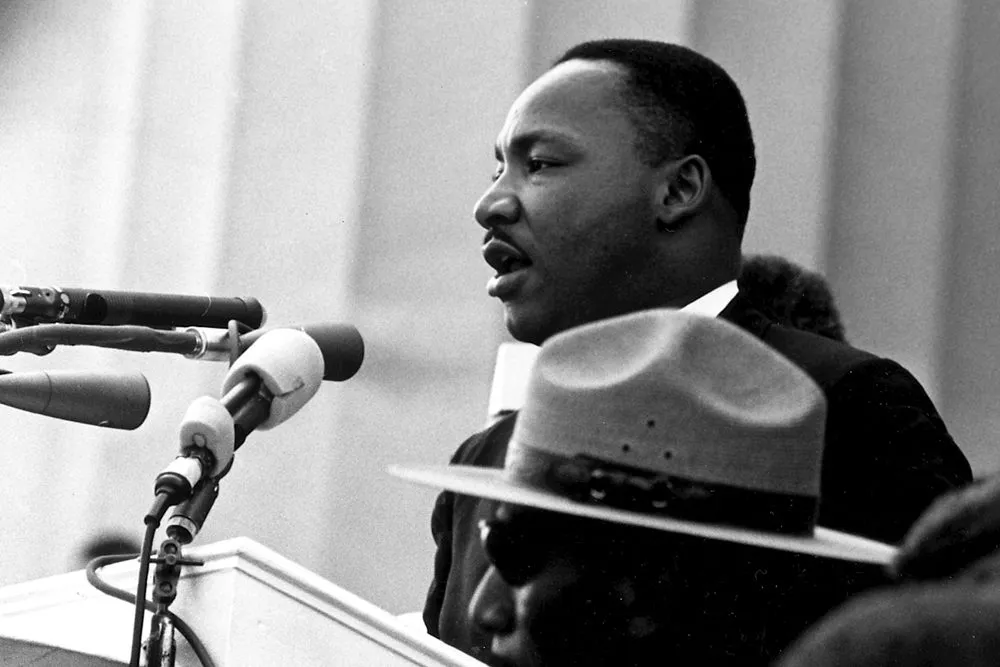
Unsurprisingly, Martin Luther King’s speech comes up top as the most inspiring speech of all time, especially given the harrowing conditions of African Americans in America at the time. In the post-abolition era when slavery was outlawed constitutionally, African Americans experienced an intense period of backlash from white supremacists who supported slavery where various institutional means were sought to subordinate African American people to positions similar to that of the slavery era. This later came to be known as the times of Jim Crow and segregation, which Martin Luther King powerfully voiced his vision for a day when racial discrimination would be a mere figment, where equality would reign.
Help me use the structure of "I have a dream" (Martin Luther King Jr, 1963) in a work presentation.

The device: anaphora. In the speech, one short line opens sentence after sentence, and each repeat adds a new, concrete picture of the future.

Audience: [your audience]
One message: [your one message]
Ask: [what you want them to do]

Write one repeatable line for my message and three sentences that start with it, each ending on a specific picture of what changes for this audience.

Keep to my facts and my own plain voice. Do not quote or imitate the speaker.
2. Tilbury Speech by Queen Elizabeth I
“My loving people,
We have been persuaded by some that are careful of our safety, to take heed how we commit our selves to armed multitudes, for fear of treachery; but I assure you I do not desire to live to distrust my faithful and loving people.
Let tyrants fear. I have always so behaved myself that, under God, I have placed my chiefest strength and safeguard in the loyal hearts and good-will of my subjects; and therefore I am come amongst you, as you see, at this time, not for my recreation and disport, but being resolved, in the midst and heat of the battle, to live and die amongst you all; to lay down for my God, and for my kingdom, and my people, my honour and my blood, even in the dust.
I know I have the body of a weak, feeble woman; but I have the heart and stomach of a king, and of a king of England too, and think foul scorn that Parma or Spain, or any prince of Europe, should dare to invade the borders of my realm; to which rather than any dishonour shall grow by me, I myself will take up arms, I myself will be your general, judge, and rewarder of every one of your virtues in the field.
I know already, for your forwardness you have deserved rewards and crowns; and We do assure you on a word of a prince, they shall be duly paid. In the mean time, my lieutenant general shall be in my stead, than whom never prince commanded a more noble or worthy subject; not doubting but by your obedience to my general, by your concord in the camp, and your valour in the field, we shall shortly have a famous victory over these enemies of my God, of my kingdom, and of my people.”
While at war with Spain, Queen Elizabeth I was most renowned for her noble speech rallying the English troops against their comparatively formidable opponent. Using brilliant rhetorical devices like metonymy, meronymy, and other potent metaphors, she voiced her deeply-held commitment as a leader to the battle against the Spanish Armada, convincing the English army to keep holding their ground and upholding the sacrifice of war for the good of their people. Eventually against all odds, she led England to victory despite their underdog status in the conflict with her confident and masterful oratory.
Help me use the structure of "Tilbury Speech" (Queen Elizabeth I, 1588) in a work presentation.

The device: concede, then reverse. In the speech, she names the weakness the audience may see in her, then turns it into a statement of resolve.

Audience: [your audience]
One message: [your one message]
Ask: [what you want them to do]

Name the doubt this audience most likely has about me or my proposal, admit it in one sentence, then turn it into the reason they can rely on me.

Keep to my facts and my own plain voice. Do not quote or imitate the speaker.
3. Woodrow Wilson, address to Congress (April 2, 1917)
“The world must be made safe for democracy. Its peace must be planted upon the tested foundations of political liberty. We have no selfish ends to serve. We desire no conquest, no dominion. We seek no indemnities for ourselves, no material compensation for the sacrifices we shall freely make. We are but one of the champions of the rights of mankind. We shall be satisfied when those rights have been made as secure as the faith and the freedom of nations can make them.
Just because we fight without rancor and without selfish object, seeking nothing for ourselves but what we shall wish to share with all free peoples, we shall, I feel confident, conduct our operations as belligerents without passion and ourselves observe with proud punctilio the principles of right and of fair play we profess to be fighting for.
…
It will be all the easier for us to conduct ourselves as belligerents in a high spirit of right and fairness because we act without animus, not in enmity toward a people or with the desire to bring any injury or disadvantage upon them, but only in armed opposition to an irresponsible government which has thrown aside all considerations of humanity and of right and is running amuck. We are, let me say again, the sincere friends of the German people, and shall desire nothing so much as the early reestablishment of intimate relations of mutual advantage between us—however hard it may be for them, for the time being, to believe that this is spoken from our hearts.
We have borne with their present government through all these bitter months because of that friendship—exercising a patience and forbearance which would otherwise have been impossible. We shall, happily, still have an opportunity to prove that friendship in our daily attitude and actions toward the millions of men and women of German birth and native sympathy who live among us and share our life, and we shall be proud to prove it toward all who are in fact loyal to their neighbors and to the government in the hour of test. They are, most of them, as true and loyal Americans as if they had never known any other fealty or allegiance. They will be prompt to stand with us in rebuking and restraining the few who may be of a different mind and purpose. If there should be disloyalty, it will be dealt with with a firm hand of stern repression; but, if it lifts its head at all, it will lift it only here and there and without countenance except from a lawless and malignant few.
It is a distressing and oppressive duty, gentlemen of the Congress, which I have performed in thus addressing you. There are, it may be, many months of fiery trial and sacrifice ahead of us. It is a fearful thing to lead this great peaceful people into war, into the most terrible and disastrous of all wars, civilization itself seeming to be in the balance. But the right is more precious than peace, and we shall fight for the things which we have always carried nearest our hearts—for democracy, for the right of those who submit to authority to have a voice in their own governments, for the rights and liberties of small nations, for a universal dominion of right by such a concert of free peoples as shall bring peace and safety to all nations and make the world itself at last free.
To such a task we can dedicate our lives and our fortunes, everything that we are and everything that we have, with the pride of those who know that the day has come when America is privileged to spend her blood and her might for the principles that gave her birth and happiness and the peace which she has treasured. God helping her, she can do no other.”
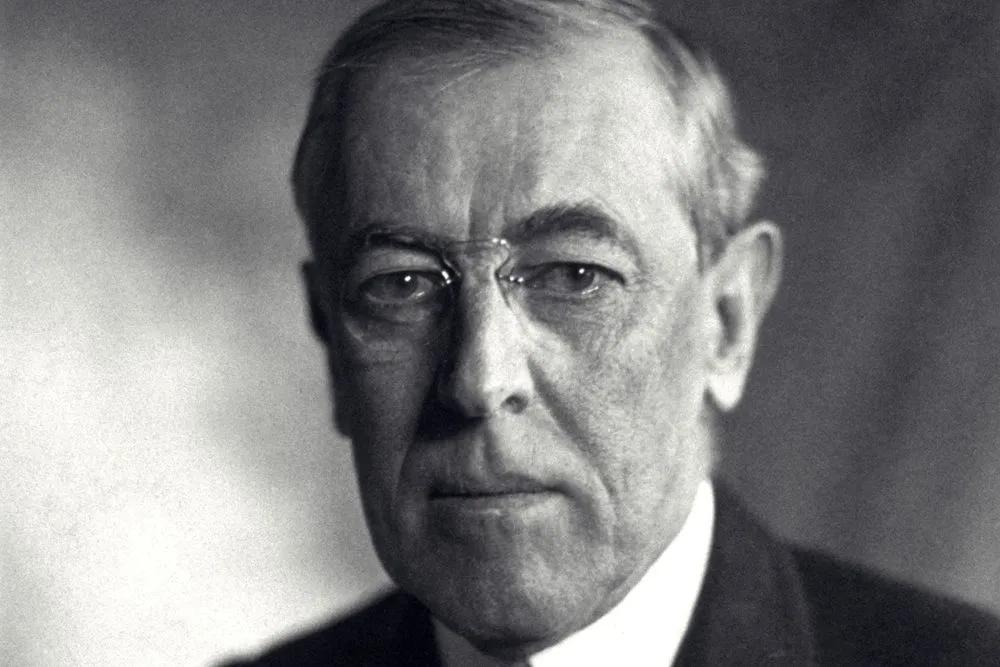
On April 2, 1917, President Woodrow Wilson of the USA delivered his address to Congress, calling for declaration of war against what was at the time, a belligerent and aggressive Germany in WWI. Despite his isolationism and anti-war position earlier in his tenure as president, he convinced Congress that America had a moral duty to the world to step out of their neutral observer status into an active role of world leadership and stewardship in order to liberate attacked nations from their German aggressors. The idealistic values he preached in his speech left an indelible imprint upon the American spirit and self-conception, forming the moral basis for the country’s people and aspirational visions to this very day.
Help me use the structure of "Address to Congress" (Woodrow Wilson, 1917) in a work presentation.

The device: disclaiming self-interest. In the speech, he lists the gains he is not seeking, so the request reads as principled.

Audience: [your audience]
One message: [your one message]
Ask: [what you want them to do]

List the two or three things my audience might suspect I want from this, rule each one out in a short sentence, then state what I am asking for.

Keep to my facts and my own plain voice. Do not quote or imitate the speaker.
4. Ain’t I A Woman by Sojourner Truth
“That man over there says that women need to be helped into carriages, and lifted over ditches, and to have the best place everywhere. Nobody ever helps me into carriages, or over mud-puddles, or gives me any best place! And ain’t I a woman? Look at me! Look at my arm! I have ploughed and planted, and gathered into barns, and no man could head me! And ain’t I a woman? I could work as much and eat as much as a man – when I could get it – and bear the lash as well! And ain’t I a woman? I have borne thirteen children, and seen most all sold off to slavery, and when I cried out with my mother’s grief, none but Jesus heard me! And ain’t I a woman?
…
If the first woman God ever made was strong enough to turn the world upside down all alone, these women together ought to be able to turn it back , and get it right side up again! And now they is asking to do it, the men better let them.”
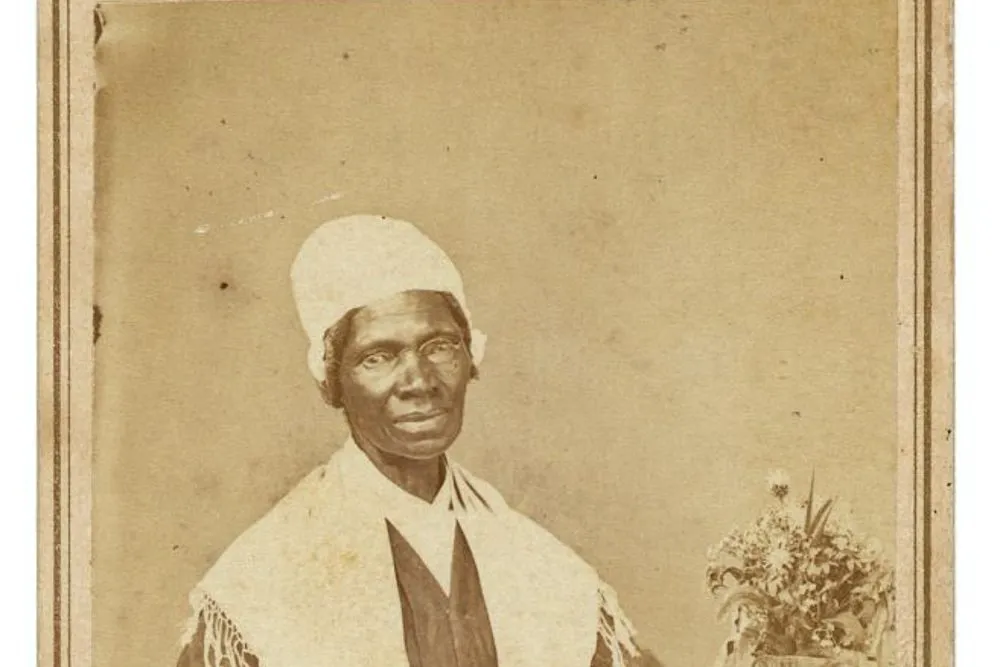
Hailing from a background of slavery and oppression, Sojourner Truth was one of the most revolutionary advocates for women’s human rights in the 1800s. In spite of the New York Anti-Slavery Law of 1827, her slavemaster refused to free her. As such, she fled, became an itinerant preacher and leading figure in the anti-slavery movement. By the 1850s, she became involved in the women’s rights movement as well. At the 1851 Women’s Rights Convention held in Akron, Ohio, she delivered her illuminating, forceful speech against discrimination of women and African Americans in the post-Civil War era, entrenching her status as one of the most revolutionary abolitionists and women’s rights activists across history.
Help me use the structure of "Ain’t I A Woman" (Sojourner Truth, 1851) in a work presentation.

The device: refrain question backed by evidence. In the speech, she repeats one question, and before each repeat she gives a piece of lived evidence the audience can see.

Audience: [your audience]
One message: [your one message]
Ask: [what you want them to do]

Write one short question that captures my point and use it as a refrain after each of three pieces of evidence from our own data or experience.

Keep to my facts and my own plain voice. Do not quote or imitate the speaker.
5. Second Inaugural Address by Abraham Lincoln
“Fondly do we hope, fervently do we pray, that this mighty scourge of war may speedily pass away. Yet, if God wills that it continue until all the wealth piled by the bondsman’s two hundred and fifty years of unrequited toil shall be sunk, and until every drop of blood drawn with the lash shall be paid by another drawn with the sword, as was said three thousand years ago, so still it must be said “the judgments of the Lord are true and righteous altogether.”
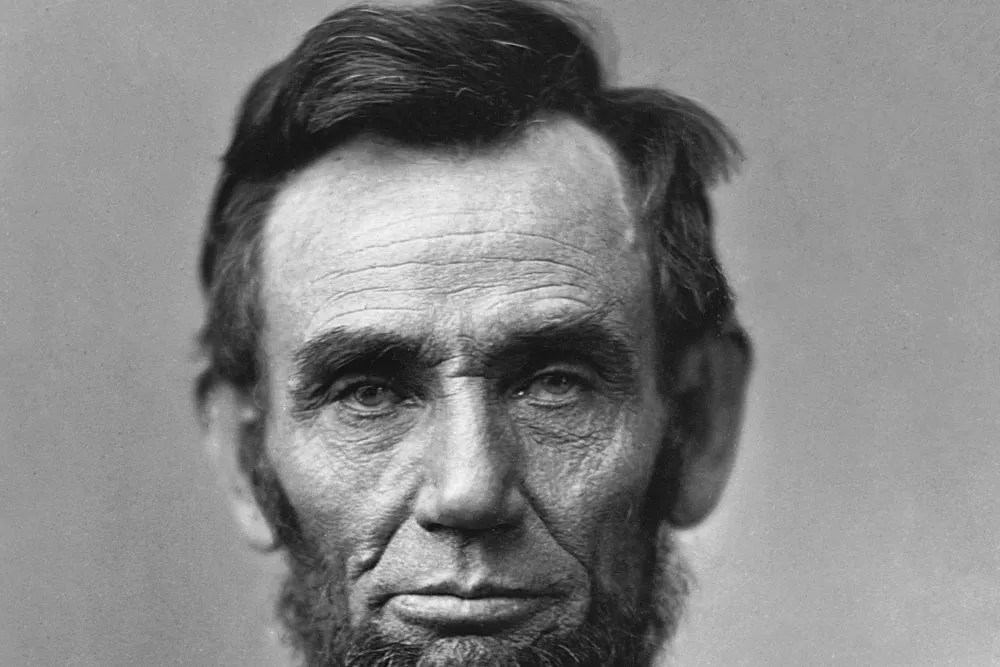
With malice toward none, with charity for all, with firmness in the right as God gives us to see the right, let us strive on to finish the work we are in, to bind up the nation’s wounds, to care for him who shall have borne the battle and for his widow and his orphan, to do all which may achieve and cherish a just and lasting peace among ourselves and with all nations.”
President Abraham Lincoln had left the most lasting legacy upon American history for good reason, as one of the presidents with the moral courage to denounce slavery for the national atrocity it was. However, more difficult than standing up for the anti-slavery cause was the task of unifying the country as the Civil War drew to a close, despite the looming shadows of a time when white Americans could own and subjugate slaves with impunity over the thousands of Americans who stood for liberation of African Americans from discrimination. He urged Americans to remember their common roots, heritage and the importance of “charity for all”, to ensure a “just and lasting peace” among within the country despite throes of racial division and self-determination.
Help me use the structure of "Second Inaugural Address" (Abraham Lincoln, 1865) in a work presentation.

The device: parallel phrases toward one task. In the speech, short, balanced phrases build in a row and land on a shared piece of work still to be done.

Audience: [your audience]
One message: [your one message]
Ask: [what you want them to do]

Write a closing paragraph of three to four parallel phrases that build toward the one action I need from this audience.

Keep to my facts and my own plain voice. Do not quote or imitate the speaker.
6. Woman’s Rights to the Suffrage by Susan B Anthony
“For any State to make sex a qualification that must ever result in the disfranchisement of one entire half of the people is to pass a bill of attainder, or an ex post facto law, and is therefore a violation of the supreme law of the land. By it the blessings of liberty are for ever withheld from women and their female posterity. To them this government has no just powers derived from the consent of the governed. To them this government is not a democracy. It is not a republic. It is an odious aristocracy; a hateful oligarchy of sex; the most hateful aristocracy ever established on the face of the globe; an oligarchy of wealth, where the right govern the poor. An oligarchy of learning, where the educated govern the ignorant, or even an oligarchy of race, where the Saxon rules the African, might be endured; but this oligarchy of sex, which makes father, brothers, husband, sons, the oligarchs over the mother and sisters, the wife and daughters of every household–which ordains all men sovereigns, all women subjects, carries dissension, discord and rebellion into every home of the nation.
Webster, Worcester and Bouvier all define a citizen to be a person in the United States, entitled to vote and hold office.
The only question left to be settled now is: Are women persons? And I hardly believe any of our opponents will have the hardihood to say they are not. Being persons, then, women are citizens; and no State has a right to make any law, or to enforce any old law, that shall abridge their privileges or immunities. Hence, every discrimination against women in the constitutions and laws of the several States is today null and void, precisely as in every one against Negroes.”
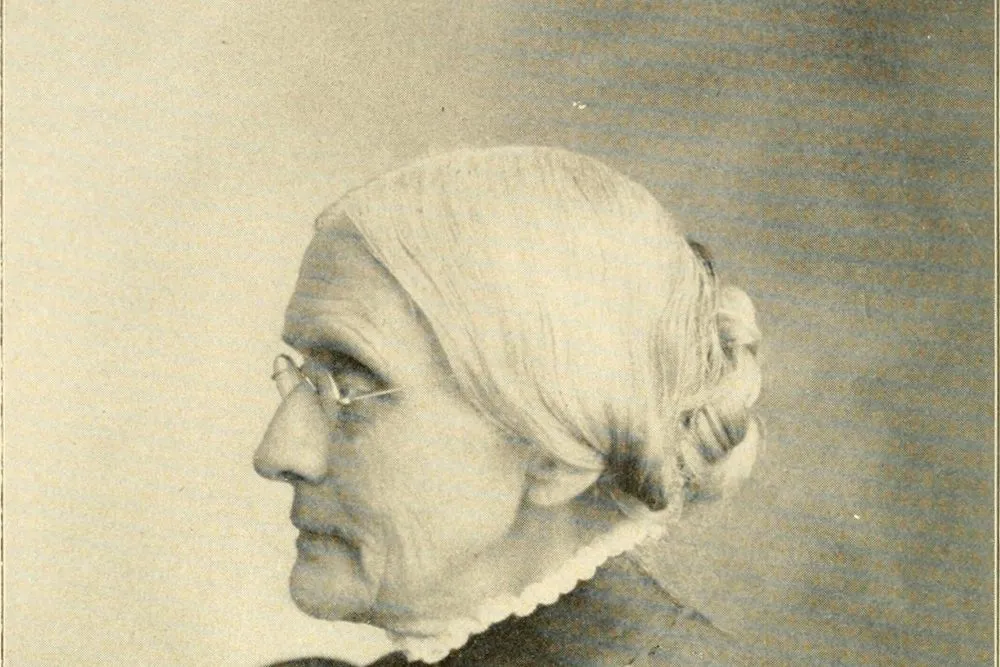
Susan B. Anthony was a pivotal leader in the women’s suffrage movement who helped to found the National Woman Suffrage Association with Elizabeth Cady Stanton and fight for the constitutional right for women to vote. She courageously and relentlessly advocated for women’s rights, giving speeches all over the USA to convince people of women’s human rights to choice and the ballot. She is most well known for her act of righteous rebellion in 1872 when she voted in the presidential election illegally, for which she was arrested and tried unsuccessfully. She refused to pay the $100 fine in a bid to reject the demands of the American system she denounced as a ‘hateful oligarchy of sex’, sparking change with her righteous oratory and inspiring many others in the women’s suffrage movement within and beyond America.
Help me use the structure of "Woman’s Rights to the Suffrage" (Susan B Anthony, 1873) in a work presentation.

The device: renaming the system. In the speech, she relabels what her audience calls normal with sharper and sharper names, so they see it differently.

Audience: [your audience]
One message: [your one message]
Ask: [what you want them to do]

Find the neutral word my audience uses for the current situation, then give me two or three more accurate names for it, building in strength, with a fact behind each.

Keep to my facts and my own plain voice. Do not quote or imitate the speaker.
7. Vladimir Lenin’s Speech at an International Meeting in Berne, February 8, 1916
“It may sound incredible, especially to Swiss comrades, but it is nevertheless true that in Russia, also, not only bloody tsarism, not only the capitalists, but also a section of the so-called or ex-Socialists say that Russia is fighting a “war of defence,” that Russia is only fighting against German invasion. The whole world knows, however, that for decades tsarism has been oppressing more than a hundred million people belonging to other nationalities in Russia; that for decades Russia has been pursuing a predatory policy towards China, Persia, Armenia and Galicia. Neither Russia, nor Germany, nor any other Great Power has the right to claim that it is waging a “war of defence”; all the Great Powers are waging an imperialist, capitalist war, a predatory war, a war for the oppression of small and foreign nations, a war for the sake of the profits of the capitalists, who are coining golden profits amounting to billions out of the appalling sufferings of the masses, out of the blood of the proletariat.
…
This again shows you, comrades, that in all countries of the world real preparations are being made to rally the forces of the working class. The horrors of war and the sufferings of the people are incredible. But we must not, and we have no reason whatever, to view the future with despair.The millions of victims who will fall in the war, and as a consequence of the war, will not fall in vain. The millions who are starving, the millions who are sacrificing their lives in the trenches, are not only suffering, they are also gathering strength, are pondering over the real cause of the war, are becoming more determined and are acquiring a clearer revolutionary understanding. Rising discontent of the masses, growing ferment, strikes, demonstrations, protests against the war—all this is taking place in all countries of the world. And this is the guarantee that the European War will be followed by the proletarian revolution against capitalism”
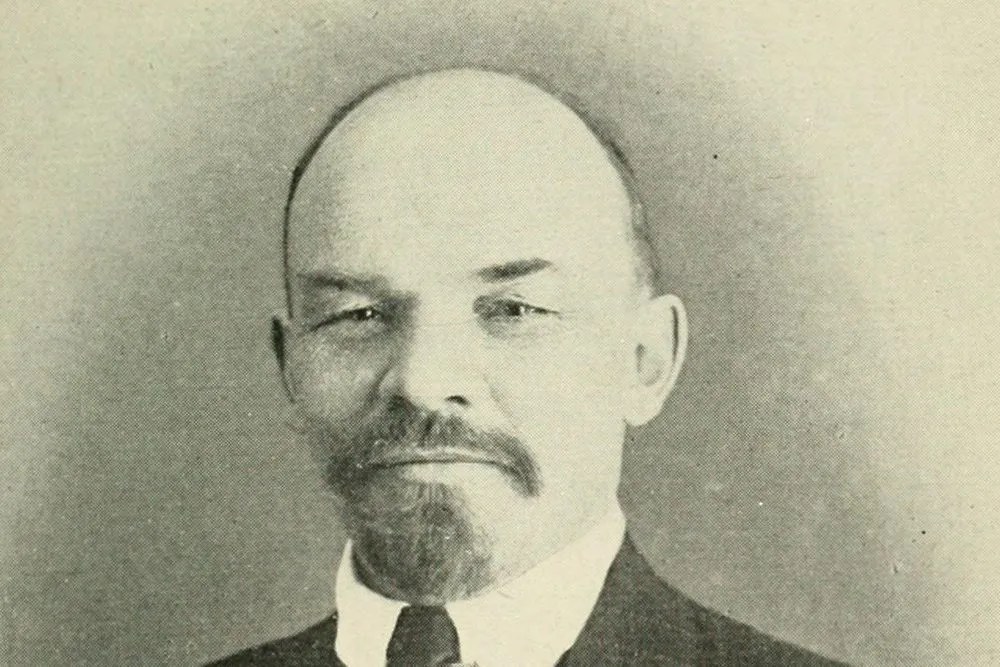
Vladimir Lenin remains to this day one of the most lauded communist revolutionaries in the world who brought the dangers of imperialism and capitalism to light with his rousing speeches condemning capitalist structures of power which inevitably enslave people to lives of misery and class stratification. In his genuine passion for the rights of the working class, he urged fellow comrades to turn the “imperialist war” into a “civil” or class war of the proletariat against the bourgeoisie. He encouraged the development of new revolutionary socialist organisations, solidarity across places in society so people could unite against their capitalist overlords, and criticised nationalism for its divisive effect on the socialist movement. In this speech especially, he lambasts “bloody Tsarism” for its oppression of millions of people of other nationalities in Russia, calling for the working class people to revolt against the Tsarist authority for the proletariat revolution to succeed and liberate them from class oppression.
Help me use the structure of "Speech at an International Meeting in Berne" (Vladimir Lenin, 1916) in a work presentation.

The device: quote the claim, then test it. In the speech, he states the opposing side's phrase in their own words, then sets the record against it.

Audience: [your audience]
One message: [your one message]
Ask: [what you want them to do]

State the most common objection to my proposal in the words people actually use, then answer it with two facts from my material.

Keep to my facts and my own plain voice. Do not quote or imitate the speaker.
8. A Vindication of the Rights of Woman by Mary Wollstonecraft
“If, I say, for I would not impress by declamation when Reason offers her sober light, if they be really capable of acting like rational creatures, let them not be treated like slaves; or, like the brutes who are dependent on the reason of man, when they associate with him; but cultivate their minds, give them the salutary, sublime curb of principle, and let them attain conscious dignity by feeling themselves only dependent on God. Teach them, in common with man, to submit to necessity, instead of giving, to render them more pleasing, a sex to morals.
Further, should experience prove that they cannot attain the same degree of strength of mind, perseverance, and fortitude, let their virtues be the same in kind, though they may vainly struggle for the same degree; and the superiority of man will be equally clear, if not clearer; and truth, as it is a simple principle, which admits of no modification, would be common to both. Nay, the order of society as it is at present regulated would not be inverted, for woman would then only have the rank that reason assigned her, and arts could not be practised to bring the balance even, much less to turn it.”
In her vindication of the rights of women, Mary Wollstonecraft was one of the pioneers of the feminist movement back in 1792 who not only theorised and advocated revolutionarily, but gave speeches that voiced these challenges against a dominantly sexist society intent on classifying women as irrational less-than-human creatures to be enslaved as they were. In this landmark speech, she pronounces her ‘dream’ of a day when women would be treated as the rational, deserving humans they are, who are equal to man in strength and capability. With this speech setting an effective precedent for her call to equalize women before the law, she also went on to champion the provision of equal educational opportunities to women and girls, and persuasively argued against the patriarchal gender norms which prevented women from finding their own lot in life through their being locked into traditional institutions of marriage and motherhood against their will.
Help me use the structure of "A Vindication of the Rights of Woman" (Mary Wollstonecraft, 1792) in a work presentation.

The device: if-then reasoning. In the speech, she grants a premise the audience accepts, then shows the conclusion that follows from it.

Audience: [your audience]
One message: [your one message]
Ask: [what you want them to do]

Start from one premise my audience already agrees with and write the if-then steps that lead to my recommendation, one sentence per step.

Keep to my facts and my own plain voice. Do not quote or imitate the speaker.
9. First Inaugural Speech by Franklin D Roosevelt
“So, first of all, let me assert my firm belief that the only thing we have to fear is…fear itself — nameless, unreasoning, unjustified terror which paralyzes needed efforts to convert retreat into advance. In every dark hour of our national life a leadership of frankness and of vigor has met with that understanding and support of the people themselves which is essential to victory. And I am convinced that you will again give that support to leadership in these critical days.
…
More important, a host of unemployed citizens face the grim problem of existence, and an equally great number toil with little return. Only a foolish optimist can deny the dark realities of the moment.Our greatest primary task is to put people to work. This is no unsolvable problem if we face it wisely and courageously.
There are many ways in which it can be helped, but it can never be helped merely by talking about it. We must act and act quickly.
…
I am prepared under my constitutional duty to recommend the measures that a stricken Nation in the midst of a stricken world may require. These measures, or such other measures as the Congress may build out of its experience and wisdom, I shall seek, within my constitutional authority, to bring to speedy adoption.But in the event that the Congress shall fail to take one of these two courses, and in the event that the national emergency is still critical, I shall not evade the clear course of duty that will then confront me. I shall ask the Congress for the one remaining instrument to meet the crisis — broad Executive power to wage a war against the emergency, as great as the power that would be given to me if we were in fact invaded by a foreign foe.”
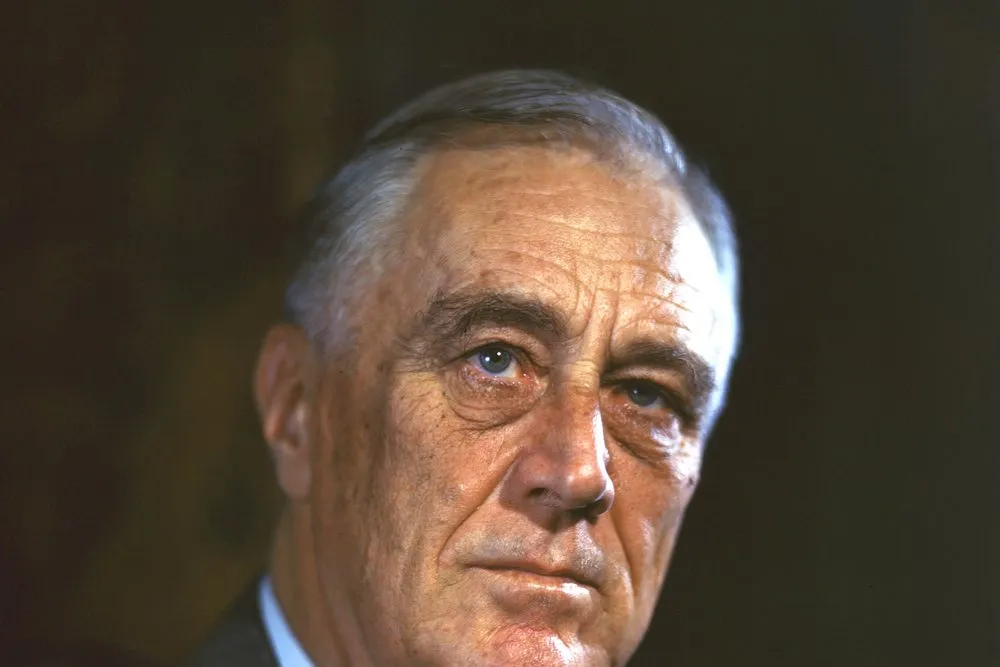
Roosevelt’s famous inaugural speech was delivered in the midst of a period of immense tension and strain under the Great Depression, where he highlighted the need for ‘quick action’ by Congress to prepare for government expansion in his pursuit of reforms to lift the American people out of devastating poverty. In a landslide victory, he certainly consolidated the hopes and will of the American people through this compelling speech.
Help me use the structure of "First Inaugural Speech" (Franklin D Roosevelt, 1933) in a work presentation.

The device: name the real problem. In the speech, he identifies the fear itself as the obstacle, then moves straight to action.

Audience: [your audience]
One message: [your one message]
Ask: [what you want them to do]

Help me name the real obstacle behind this problem in one memorable sentence, then follow it with the first three actions we will take.

Keep to my facts and my own plain voice. Do not quote or imitate the speaker.
10. The Hypocrisy of American Slavery by Frederick Douglass
“What to the American slave is your Fourth of July? I answer, a day that reveals to him more than all other days of the year, the gross injustice and cruelty to which he is the constant victim. To him your celebration is a sham; your boasted liberty an unholy license; your national greatness, swelling vanity; your sounds of rejoicing are empty and heartless; your shouts of liberty and equality, hollow mock; your prayers and hymns, your sermons and thanksgivings, with all your religious parade and solemnity, are to him mere bombast, fraud, deception, impiety, and hypocrisy – a thin veil to cover up crimes which would disgrace a nation of savages. There is not a nation of the earth guilty of practices more shocking and bloody than are the people of these United States at this very hour.
Go search where you will, roam through all the monarchies and despotisms of the Old World,
travel through South America, search out every abuse and when you have found the last, lay your facts by the side of the everyday practices of this nation, and you will say with me that, for revolting barbarity and shameless hypocrisy, America reigns without a rival.”
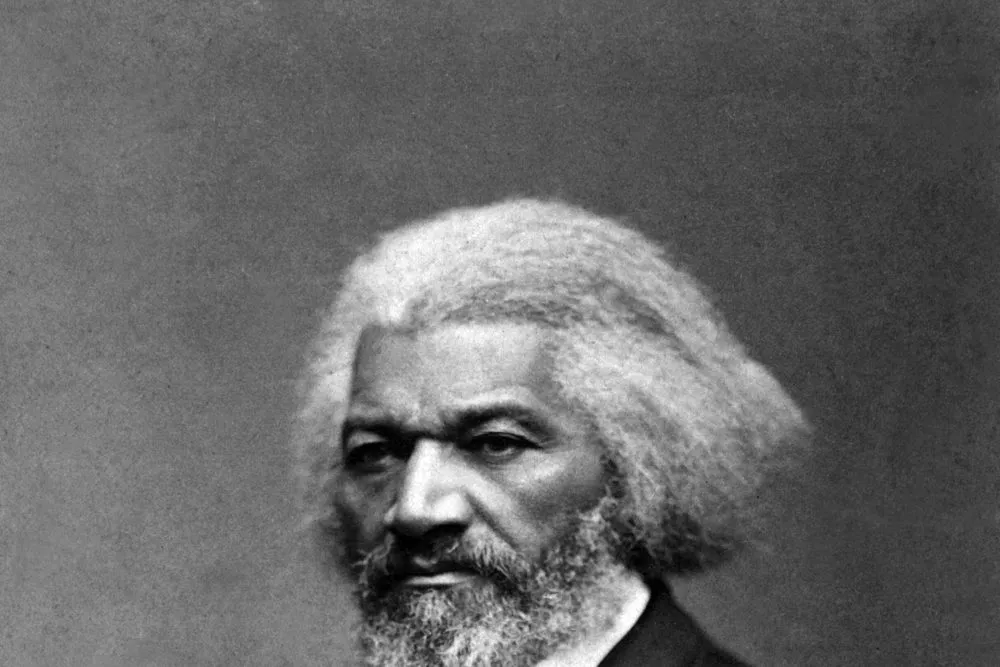
On 4 July 1852, Frederick Douglass gave this speech in Rochester, New York, highlighting the hypocrisy of celebrating freedom while slavery continues. He exposed the ‘revolting barbarity and shameless hypocrisy’ of slavery which had gone unabolished amidst the comparatively obscene celebration of independence and liberty with his potent speech and passion for the anti-abolition cause. After escaping from slavery, he went on to become a national leader of the abolitionist movement in Massachusetts and New York with his oratory and incisive antislavery writings. To this day, his fierce activism and devotion to exposing virulent racism for what it was has left a lasting legacy upon pro-Black social movements and the overall sociopolitical landscape of America.
Help me use the structure of "The Hypocrisy of American Slavery" (Frederick Douglass, 1852) in a work presentation.

The device: shift the point of view. In the speech, he asks what a familiar occasion means to the people it leaves out.

Audience: [your audience]
One message: [your one message]
Ask: [what you want them to do]

Pick the stakeholder this audience is least likely to think about, and write a question and a short paragraph that shows my topic from that person's side.

Keep to my facts and my own plain voice. Do not quote or imitate the speaker.
11. Still I Rise by Maya Angelou
Angelou reciting excerpts, not the full poem.
“You may write me down in history
With your bitter, twisted lies,
You may trod me in the very dirt
But still, like dust, I’ll rise.
Does my sassiness upset you?
Why are you beset with gloom?
’Cause I walk like I’ve got oil wells
Pumping in my living room.
Just like moons and like suns,
With the certainty of tides,
Just like hopes springing high,
Still I’ll rise.
Did you want to see me broken?
Bowed head and lowered eyes?
Shoulders falling down like teardrops,
Weakened by my soulful cries?
Does my haughtiness offend you?
Don’t you take it awful hard
’Cause I laugh like I’ve got gold mines
Diggin’ in my own backyard.
You may shoot me with your words,
You may cut me with your eyes,
You may kill me with your hatefulness,
But still, like air, I’ll rise.
Does my sexiness upset you?
Does it come as a surprise
That I dance like I’ve got diamonds
At the meeting of my thighs?
Out of the huts of history’s shame
I rise
Up from a past that’s rooted in pain
I rise
I’m a black ocean, leaping and wide,
Welling and swelling I bear in the tide.
Leaving behind nights of terror and fear
I rise
Into a daybreak that’s wondrously clear
I rise
Bringing the gifts that my ancestors gave,
I am the dream and the hope of the slave.
I rise
I rise
I rise.”
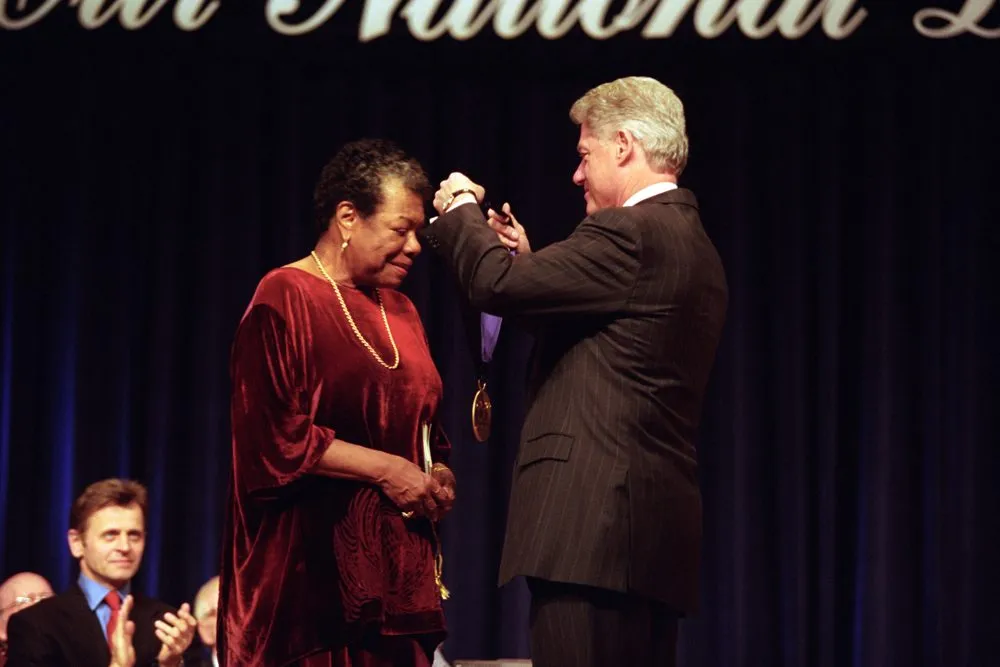
With her iconic poem Still I Rise, Maya Angelou is well-known for uplifting fellow African American women through her empowering novels and poetry and her work as a civil rights activist. Every bit as lyrical on the page, her recitation of Still I Rise continues to give poetry audiences shivers all over the world, inspiring women of colour everywhere to keep the good faith in striving for equality and peace, while radically believing in and empowering themselves to be agents of change. A dramatic reading of the poem will easily showcase the self-belief, strength and punch that it packs in the last stanza on the power of resisting marginalization.
Help me use the structure of "Still I Rise" (Maya Angelou, 1978) in a work presentation.

The device: refrain after each setback. In the speech, each verse names a setback, and the same short line answers it.

Audience: [your audience]
One message: [your one message]
Ask: [what you want them to do]

List three setbacks this project or team has faced and write one short answering line I can repeat after each to show where we stand now.

Keep to my facts and my own plain voice. Do not quote or imitate the speaker.
12. Their Finest Hour by Winston Churchill
Audio recording over stills. No film of the 1940 address survives.
“What General Weygand called the Battle of France is over. I expect that the Battle of Britain is about to begin. Upon this battle depends the survival of Christian civilization. Upon it depends our own British life, and the long continuity of our institutions and our Empire. The whole fury and might of the enemy must very soon be turned on us. Hitler knows that he will have to break us in this Island or lose the war. If we can stand up to him, all Europe may be free and the life of the world may move forward into broad, sunlit uplands. But if we fail, then the whole world, including the United States, including all that we have known and cared for, will sink into the abyss of a new Dark Age made more sinister, and perhaps more protracted, by the lights of perverted science. Let us therefore brace ourselves to our duties, and so bear ourselves that, if the British Empire and its Commonwealth last for a thousand years, men will still say, “This was their finest hour.””
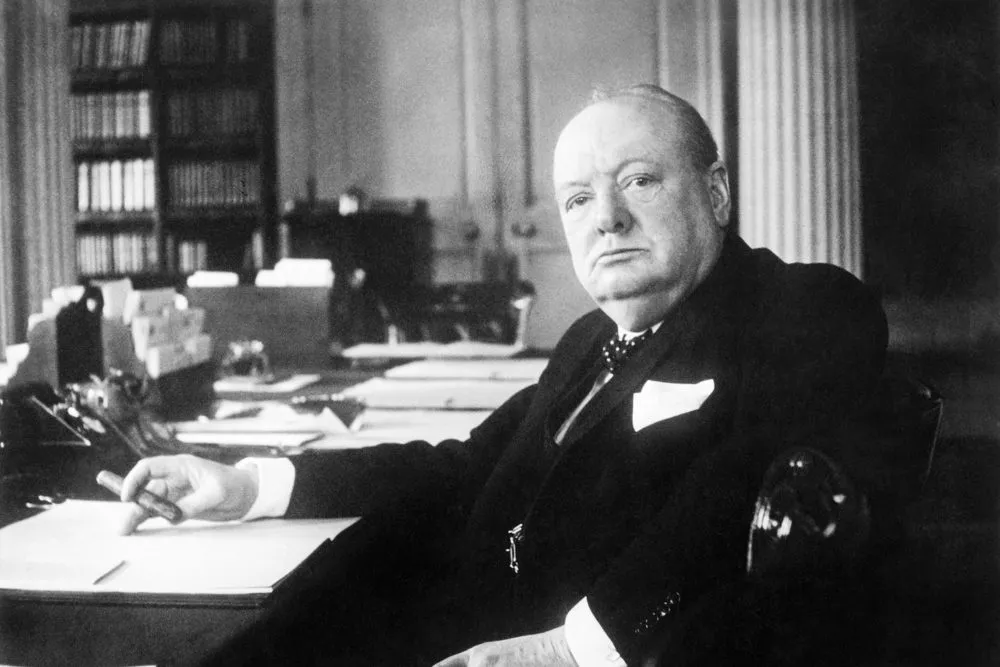
In the darkest shadows cast by war, few leaders have been able to step up to the mantle and effectively unify millions of citizens for truly sacrificial causes. Winston Churchill was the extraordinary exception, lifting 1940 Britain out of the darkness with his hopeful, convicted rhetoric to galvanise the English amidst bleak, dreary days of war and loss. Through Britain’s standalone position in WWII against the Nazis, he left his legacy by unifying the nation under shared sacrifices of the army and commemorating their courage.
Help me use the structure of "Their Finest Hour" (Winston Churchill, 1940) in a work presentation.

The device: raising the stakes. In the speech, repeated sentence openings climb from the immediate battle to everything that depends on it.

Audience: [your audience]
One message: [your one message]
Ask: [what you want them to do]

Write four sentences that start the same way and rise from the immediate decision to the larger things that depend on it for this audience.

Keep to my facts and my own plain voice. Do not quote or imitate the speaker.
13. A Room of One’s Own by Virginia Woolf
“Life for both sexes – and I looked at them (through a restaurant window while waiting for my lunch to be served), shouldering their way along the pavement – is arduous, difficult, a perpetual struggle. It calls for gigantic courage and strength. More than anything, perhaps, creatures of illusion as we are, it calls for confidence in oneself. Without self-confidence we are babes in the cradle. And how can we generate this imponderable quality, which is yet so invaluable, most quickly? By thinking that other people are inferior to oneself. By feeling that one has some innate superiority – it may be wealth, or rank, a straight nose, or the portrait of a grandfather by Romney – for there is no end to the pathetic devices of the human imagination – over other people. Hence the enormous importance to a patriarch who has to conquer, who has to rule, of feeling that great numbers of people, half the human race indeed, are by nature inferior to himself. It must indeed be one of the great sources of his power….Women have served all these centuries as looking-glasses possessing the magic and delicious power of reflecting the figure of man at twice its natural size. Without that power probably the earth would still be swamp and jungle. The glories of all our wars would be on the remains of mutton bones and bartering flints for sheepskins or whatever simple ornament took our unsophisticated taste. Supermen and Fingers of Destiny would never have existed. The Czar and the Kaiser would never have worn their crowns or lost them. Whatever may be their use in civilised societies, mirrors are essential to all violent and heroic action. That is why Napoleon and Mussolini both insist so emphatically upon the inferiority of women, for if they were not inferior, they would cease to enlarge. That serves to explain in part the necessity that women so often are to men. And it serves to explain how restless they are under her criticism; how impossible it is for her to say to them this book is bad, this picture is feeble, or whatever it may be, without giving far more pain and rousing far more anger than a man would do who gave the same criticism. For if she begins to tell the truth, the figure in the looking-glass shrinks; his fitness in life is diminished. How is he to go on giving judgment, civilising natives, making laws, writing books, dressing up and speechifying at banquets, unless he can see himself at breakfast and at dinner at least twice the size he really is?”
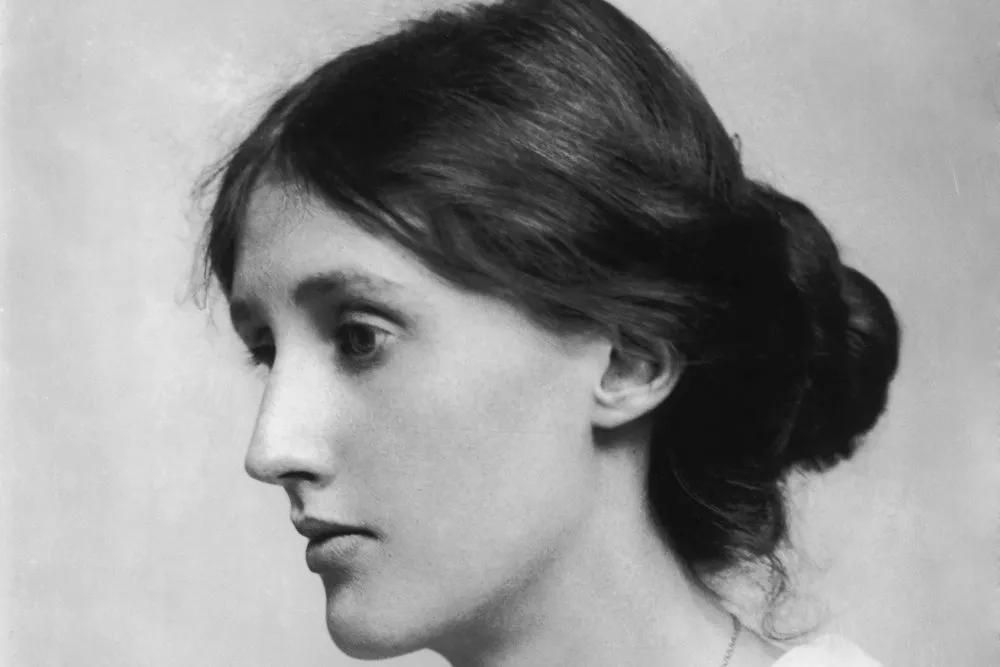
In this transformational speech, Virginia Woolf pronounces her vision that ‘a woman must have money and a room of her own if she is to write fiction’. She calls out the years in which women have been deprived of their own space for individual development through being chained to traditional arrangements or men’s prescriptions, demanding ‘gigantic courage’ and ‘confidence in oneself’ to brave through the onerous struggle of creating change for women’s rights. With her steadfast, stolid rhetoric and radical theorization, she paved the way for many women’s rights activists and writers to forge their own paths against patriarchal authority.
Help me use the structure of "A Room of One’s Own" (Virginia Woolf, 1928) in a work presentation.

The device: observed scene to argument. In the speech, she starts from something small she watched, then widens it into the point.

Audience: [your audience]
One message: [your one message]
Ask: [what you want them to do]

Help me open with one small scene I have observed at work (I will describe it), then write the two sentences that widen it into my message.

Keep to my facts and my own plain voice. Do not quote or imitate the speaker.
14. Inaugural Address by John F Kennedy
“In the long history of the world, only a few generations have been granted the role of defending freedom in its hour of maximum danger. I do not shrink from this responsibility–I welcome it. I do not believe that any of us would exchange places with any other people or any other generation. The energy, the faith, the devotion which we bring to this endeavor will light our country and all who serve it–and the glow from that fire can truly light the world.
And so, my fellow Americans: ask not what your country can do for you–ask what you can do for your country.
My fellow citizens of the world: ask not what America will do for you, but what together we can do for the freedom of man.
Finally, whether you are citizens of America or citizens of the world, ask of us here the same high standards of strength and sacrifice which we ask of you. With a good conscience our only sure reward, with history the final judge of our deeds, let us go forth to lead the land we love, asking His blessing and His help, but knowing that here on earth God’s work must truly be our own.”
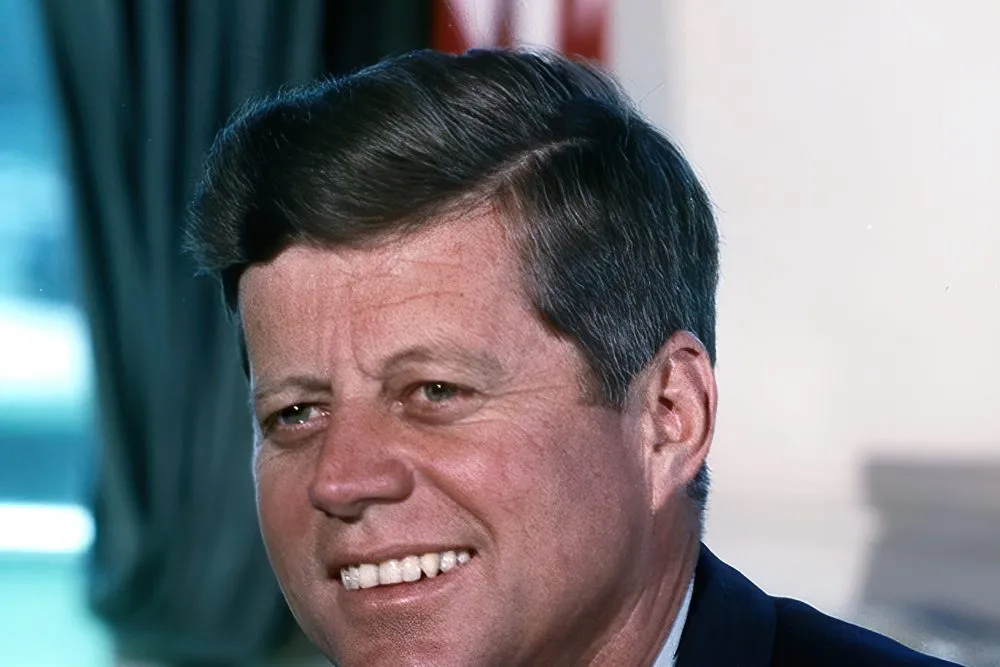
For what is probably the most historically groundbreaking use of parallelism in speech across American history, President JFK placed the weighty task of ‘asking what one can do for their country’ onto the shoulders of each American citizen. Using an air of firmness in his rhetoric by declaring his commitment to his countrymen, he urges each American to do the same for the broader, noble ideal of freedom for all. With his crucial interrogation of a citizen’s moral duty to his nation, President JFK truly made history.
Help me use the structure of "Inaugural Address" (John F Kennedy, 1961) in a work presentation.

The device: chiasmus and parallelism. In the speech, balanced phrases reverse or mirror each other so the line is easy to remember and repeat.

Audience: [your audience]
One message: [your one message]
Ask: [what you want them to do]

Write three options for one mirrored or reversed line that states my message and my ask, short enough to fit on a slide.

Keep to my facts and my own plain voice. Do not quote or imitate the speaker.
15. Atoms for Peace Speech by Dwight Eisenhower
“To pause there would be to confirm the hopeless finality of a belief that two atomic colossi are doomed malevolently to eye each other indefinitely across a trembling world. To stop there would be to accept helplessly the probability of civilization destroyed, the annihilation of the irreplaceable heritage of mankind handed down to us from generation to generation, and the condemnation of mankind to begin all over again the age-old struggle upward from savagery towards decency, and right, and justice. Surely no sane member of the human race could discover victory in such desolation. Could anyone wish his name to be coupled by history with such human degradation and destruction?Occasional pages of history do record the faces of the “great destroyers”, but the whole book of history reveals mankind’s never-ending quest for peace and mankind’s God-given capacity to build.
It is with the book of history, and not with isolated pages, that the United States will ever wish to be identified. My country wants to be constructive,not destructive. It wants agreements, not wars, among nations. It wants itself to live in freedom and in the confidence that the peoples of every other nation enjoy equally the right of choosing their own way of life.
So my country’s purpose is to help us to move out of the dark chamber of horrors into the light, to find a way by which the minds of men, the hopes of men, the souls of men everywhere, can move forward towards peace and happiness and well-being.”
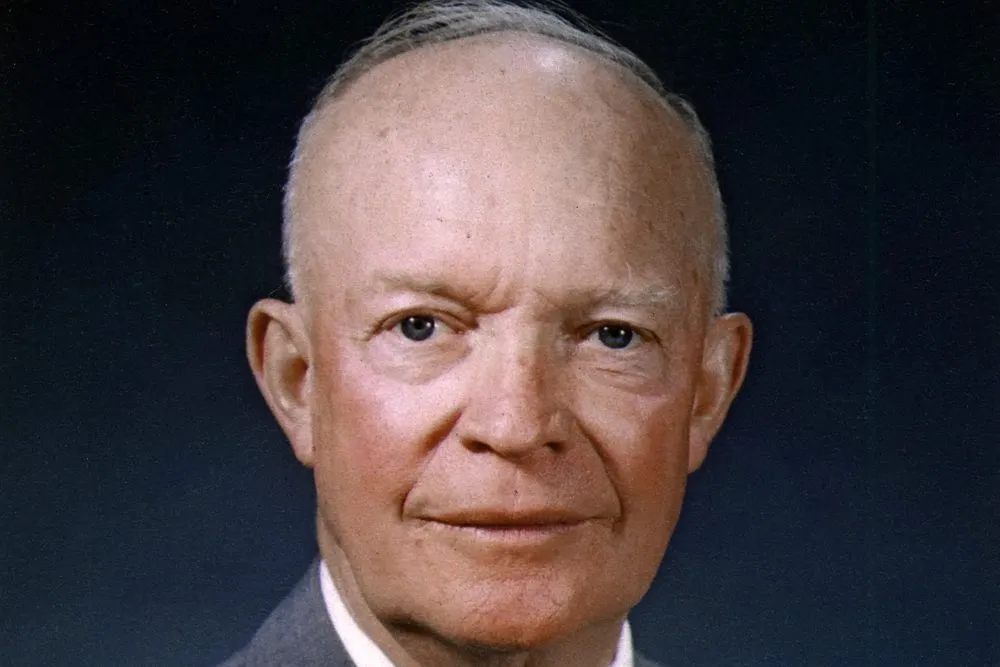
On a possibility as frightful and tense as nuclear war, President Eisenhower managed to convey the gravity of the world’s plight in his measured and persuasive speech centred on the greater good of mankind. Using rhetorical devices such as the three-part paratactical syntax which most world leaders are fond of for ingraining their words in the minds of their audience, he centers the discourse of the atomic bomb on those affected by such a world-changing decision in ‘the minds, hopes and souls of men everywhere’, effectively putting the vivid image of millions of people’s fates at stake in the minds of his audience. Being able to make a topic as heavy and fraught with moral conflict as this as eloquent as he did, Eisenhower definitely ranks among some of the most skilled orators to date.
Help me use the structure of "Atoms for Peace Speech" (Dwight D Eisenhower, 1953) in a work presentation.

The device: cost of standing still. In the speech, he describes what happens if the audience stops where they are, then closes with a pointed question.

Audience: [your audience]
One message: [your one message]
Ask: [what you want them to do]

Describe in three sentences what happens if we keep doing what we do now, then write one question that makes the audience weigh that cost.

Keep to my facts and my own plain voice. Do not quote or imitate the speaker.
16. The Transformation of Silence into Language and Action by Audre Lorde
“I was going to die, if not sooner then later, whether or not I had ever spoken myself. My silences had not protected me. Your silence will not protect you. But for every real word spoken, for every attempt I had ever made to speak those truths for which I am still seeking, I had made contact with other women while we examined the words to fit a world in which we all believed, bridging our differences.
What are the words you do not have yet? What do you need to say? What are the tyrannies you swallow day by day and attempt to make your own, until you will sicken and die of them, still in silence? Perhaps for some of you here today, I am the face of one of your fears. Because I am a woman, because I am black, because I am myself, a black woman warrior poet doing my work, come to ask you, are you doing yours?”
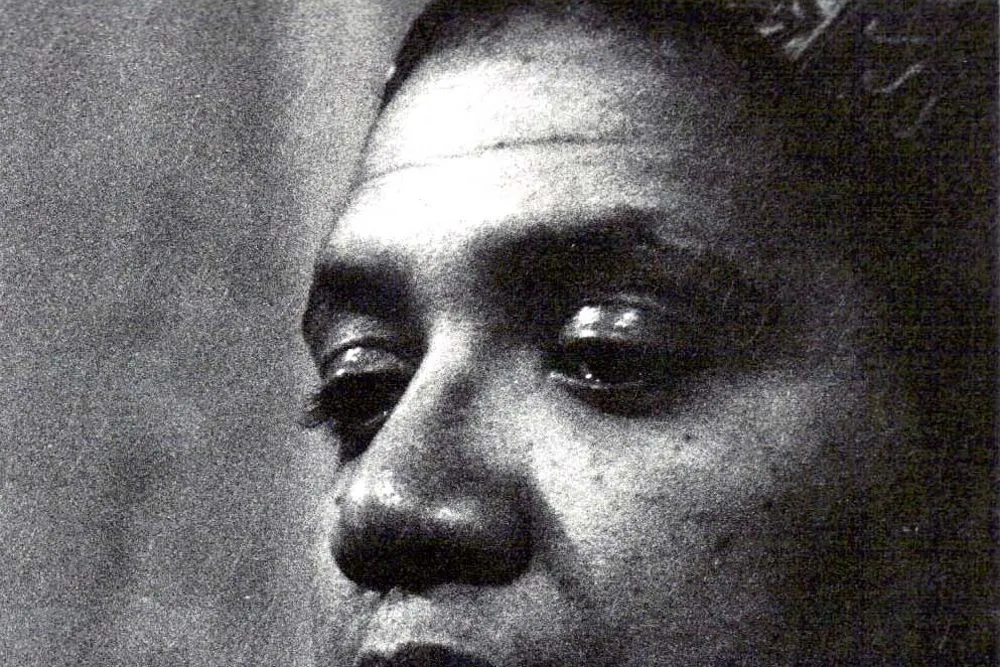
Revolutionary writer, feminist and civil rights activist Audre Lorde first delivered this phenomenal speech at Lesbian and Literature panel of the Modern Language Association’s December 28, 1977 meeting, which went on to feature permanently in her writings for its sheer wisdom and truth. Her powerful writing and speech about living on the margins of society has enlightened millions of people discriminated across various intersections, confronting them with the reality that they must speak, since their ‘silence will not protect’ them from further marginalization. Through her illuminating words and oratory, she has reminded marginalized persons of the importance of their selfhood and the radical capacity for change they have in a world blighted by prejudice and division.
Help me use the structure of "The Transformation of Silence into Language and Action" (Audre Lorde, 1977) in a work presentation.

The device: from i to you. In the speech, she states a hard truth about herself, then turns the same sentence to the audience.

Audience: [your audience]
One message: [your one message]
Ask: [what you want them to do]

Help me write one honest sentence about a mistake or lesson of mine, then the same sentence turned to the audience as a call to act.

Keep to my facts and my own plain voice. Do not quote or imitate the speaker.
17. 1965 Cambridge Union Hall Speech by James Baldwin
Baldwin's address sits within the full Baldwin and Buckley debate.
“What is dangerous here is the turning away from – the turning away from – anything any white American says. The reason for the political hesitation, in spite of the Johnson landslide is that one has been betrayed by American politicians for so long. And I am a grown man and perhaps I can be reasoned with. I certainly hope I can be. But I don’t know, and neither does Martin Luther King, none of us know how to deal with those other people whom the white world has so long ignored, who don’t believe anything the white world says and don’t entirely believe anything I or Martin is saying. And one can’t blame them. You watch what has happened to them in less than twenty years.”
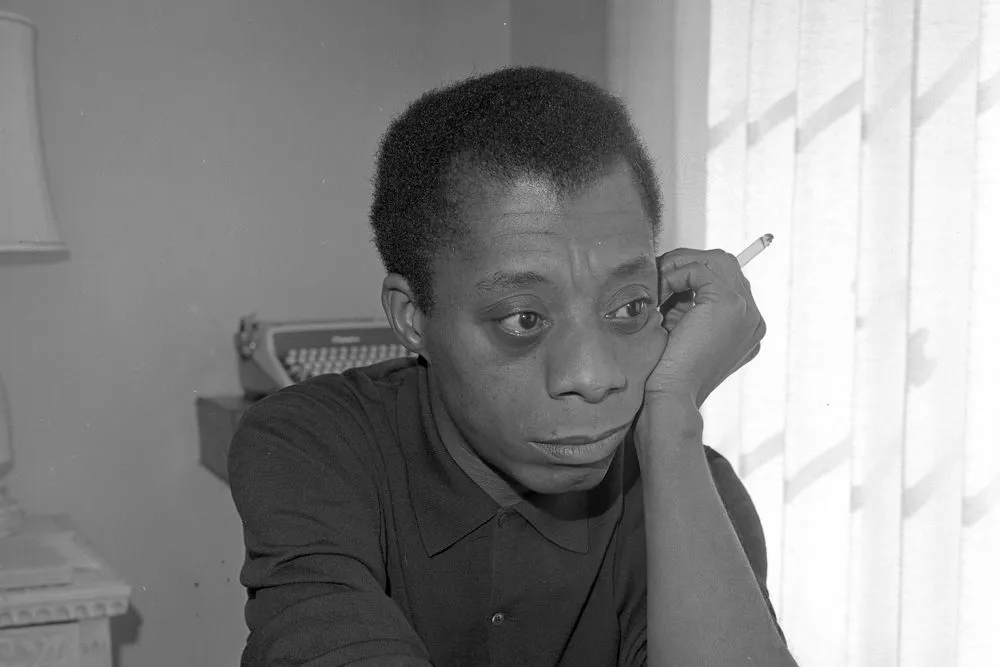
Baldwin’s invitation to the Cambridge Union Hall is best remembered for foregrounding the unflinching differences in white and African Americans’ ‘system of reality’ in everyday life. Raising uncomfortable truths about the insidious nature of racism post-civil war, he provides several nuggets of thought-provoking wisdom on the state of relations between the oppressed and their oppressors, and what is necessary to mediate such relations and destroy the exploitative thread of racist hatred. With great frankness, he admits to not having all the answers but provides hard-hitting wisdom on engagement to guide activists through confounding times nonetheless.
Help me use the structure of "1965 Cambridge Union Hall Speech" (James Baldwin, 1965) in a work presentation.

The device: speaking from your own standing. In the speech, he grounds the argument in his own position and experience, then reasons outward from it.

Audience: [your audience]
One message: [your one message]
Ask: [what you want them to do]

Help me state in two sentences why I am the person to make this case, based on what I have seen or done, then connect that to my recommendation.

Keep to my facts and my own plain voice. Do not quote or imitate the speaker.
18. I Am Prepared to Die by Nelson Mandela
Archival audio of the 1964 statement from the dock.
“Above all, My Lord, we want equal political rights, because without them our disabilities will be permanent. I know this sounds revolutionary to the whites in this country, because the majority of voters will be Africans. This makes the white man fear democracy.
But this fear cannot be allowed to stand in the way of the only solution which will guarantee racial harmony and freedom for all. It is not true that the enfranchisement of all will result in racial domination. Political division, based on colour, is entirely artificial and, when it disappears, so will the domination of one colour group by another. The ANC has spent half a century fighting against racialism. When it triumphs as it certainly must, it will not change that policy.
This then is what the ANC is fighting. Our struggle is a truly national one. It is a struggle of the African people, inspired by our own suffering and our own experience. It is a struggle for the right to live.
During my lifetime I have dedicated my life to this struggle of the African people. I have fought against white domination, and I have fought against black domination. I have cherished the ideal of a democratic and free society in which all persons will live together in harmony and with equal opportunities. It is an ideal for which I hope to live for and to see realised. But, My Lord, if it needs be, it is an ideal for which I am prepared to die.”
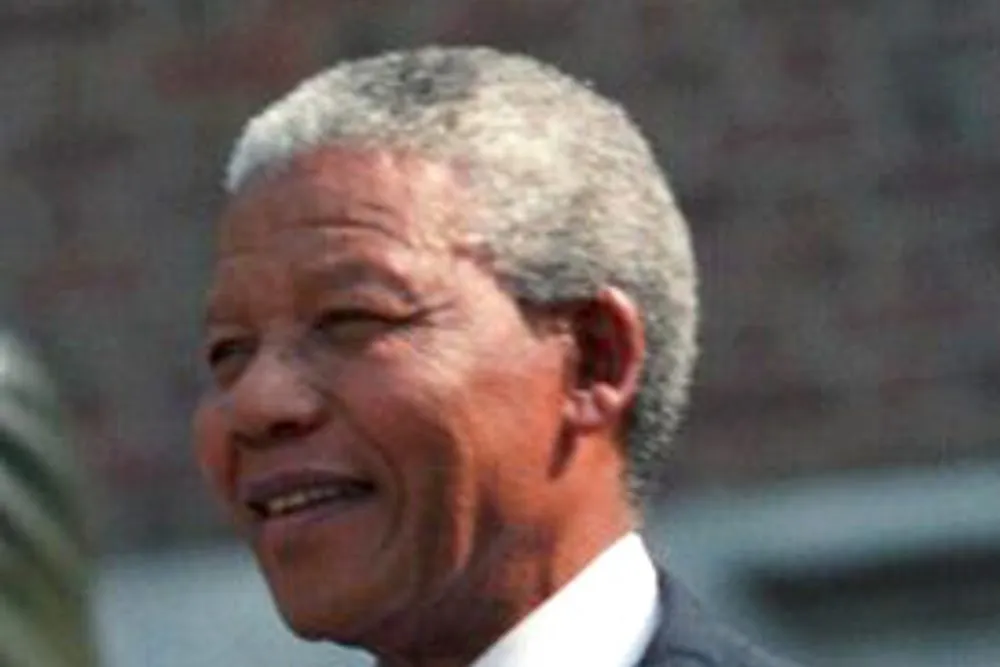
Apartheid is still considered one of these most devastating events of world history, and it would not have ended without the crucial effort and words of Nelson Mandela during his courageous political leadership. In this heartbreaking speech, he voices his utter devotion to the fight against institutionalised racism in African society, an ideal for which he was ‘prepared to die for’. Mandela continues to remind us today of his moral conviction in leading, wherein the world would likely to be a better place if all politicians had the same resolve and genuine commitment to human rights and the abolition of oppression as he did.
Help me use the structure of "I Am Prepared to Die" (Nelson Mandela, 1964) in a work presentation.

The device: answer the fear out loud. In the speech, he names the fear his opponents hold, then explains why it should not decide the matter.

Audience: [your audience]
One message: [your one message]
Ask: [what you want them to do]

Name the fear this audience is least likely to say aloud about my proposal, state it plainly, then answer it with facts and a safeguard.

Keep to my facts and my own plain voice. Do not quote or imitate the speaker.
19. Critique on British Imperialism by General Aung San
“Do they form their observations by seeing the attendances at not very many cinemas and theatres of Rangoon? Do they judge this question of money circulation by paying a stray visit to a local bazaar? Do they know that cinemas and theatres are not true indicators, at least in Burma, of the people’s conditions? Do they know that there are many in this country who cannot think of going to these places by having to struggle for their bare existence from day to day? Do they know that those who nowadays patronise or frequent cinemas and theatres which exist only in Rangoon and a few big towns, belong generally to middle and upper classes and the very few of the many poor who can attend at all are doing so as a desperate form of relaxation just to make them forget their unsupportable existences for the while whatever may be the tomorrow that awaits them?”
Under British colonial rule, one of the most legendary nationalist leaders emerged from the ranks of the thousands of Burmese to boldly lead them towards independence, out of the exploitation and control under the British. General Aung San’s speech criticising British social, political and economic control of Burma continues to be scathing, articulate, and relevant, especially given his necessary goal of uniting the Burmese natives against their common oppressor. He successfully galvanised his people against the British, taking endless risks through nationalist speeches and demonstrations which gradually bore fruit in Burma’s independence.
Help me use the structure of "Critique on British Imperialism" (General Aung San, 1930s–40s) in a work presentation.

The device: questions that test the evidence. In the speech, a run of questions asks whether the other side's evidence shows what they claim.

Audience: [your audience]
One message: [your one message]
Ask: [what you want them to do]

Turn the weak points in the current assumption into four short questions, then give the evidence that answers them.

Keep to my facts and my own plain voice. Do not quote or imitate the speaker.
20. Nobel Lecture by Mother Teresa
“I believe that we are not real social workers. We may be doing social work in the eyes of the people, but we are really contemplatives in the heart of the world. For we are touching the Body Of Christ 24 hours. We have 24 hours in this presence, and so you and I. You too try to bring that presence of God in your family, for the family that prays together stays together. And I think that we in our family don’t need bombs and guns, to destroy to bring peace–just get together, love one another, bring that peace, that joy, that strength of presence of each other in the home. And we will be able to overcome all the evil that is in the world.
There is so much suffering, so much hatred, so much misery, and we with our prayer, with our sacrifice are beginning at home. Love begins at home, and it is not how much we do, but how much love we put in the action that we do. It is to God Almighty–how much we do it does not matter, because He is infinite, but how much love we put in that action. How much we do to Him in the person that we are serving.”

In contemporary culture, most people understand Mother Teresa to be the epitome of compassion and kindness. However, if one were to look closer at her speeches from the past, one would discover not merely her altruistic contributions, but her keen heart for social justice and the downtrodden. She wisely and gracefully remarks that ‘love begins at home’ from the individual actions of each person within their private lives, which accumulate into a life of goodness and charity. For this, her speeches served not just consolatory value or momentary relevance, as they still inform the present on how we can live lives worth living.
Help me use the structure of "Nobel Lecture" (Mother Teresa, 1979) in a work presentation.

The device: from the global to the local. In the speech, she takes a vast problem down to one small action anyone can start at home.

Audience: [your audience]
One message: [your one message]
Ask: [what you want them to do]

Take the big goal in my presentation and bring it down to one small action each person in the room can take this week.

Keep to my facts and my own plain voice. Do not quote or imitate the speaker.
21. June 9 Speech to Martial Law Units by Deng Xiaoping
“This army still maintains the traditions of our old Red Army. What they crossed this time was in the true sense of the expression a political barrier, a threshold of life and death. This was not easy. This shows that the People’s Army is truly a great wall of iron and steel of the party and state. This shows that no matter how heavy our losses, the army, under the leadership of the party, will always remain the defender of the country, the defender of socialism, and the defender of the public interest. They are a most lovable people. At the same time, we should never forget how cruel our enemies are. We should have not one bit of forgiveness for them.
The fact that this incident broke out as it did is very worthy of our pondering. It prompts us cool-headedly to consider the past and the future. Perhaps this bad thing will enable us to go ahead with reform and the open policy at a steadier and better — even a faster — pace, more speedily correct our mistakes, and better develop our strong points.”
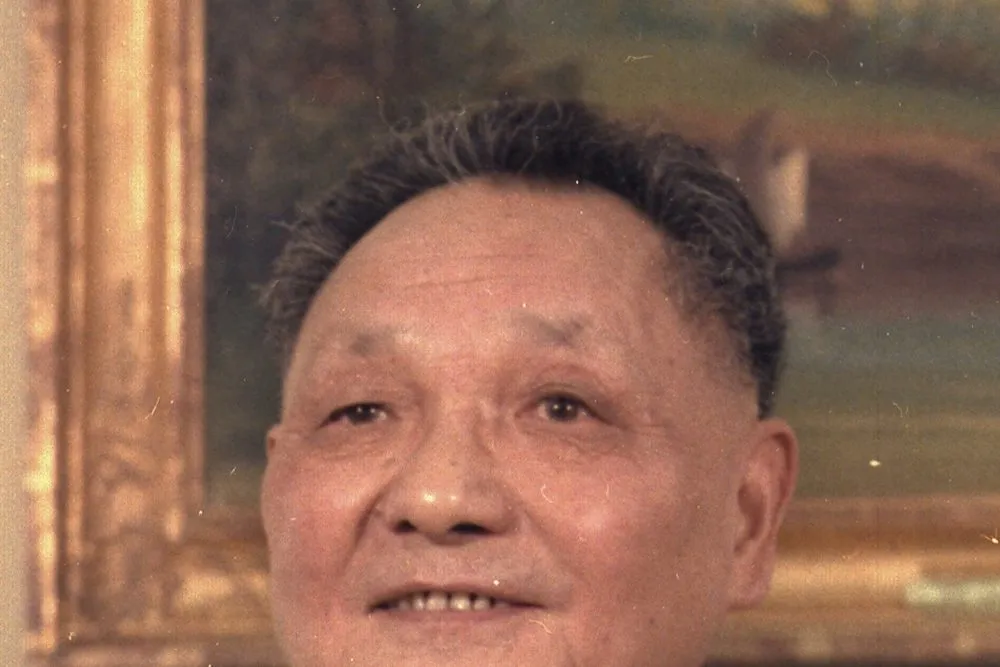
On 9 June 1989, five days after the military crackdown on the Tiananmen Square protests, Chinese Communist Party leader Deng Xiaoping addressed the commanders of the martial law units in Beijing. His speech set out the political complexities in shutting down student protests given the context of reforms encouraging economic liberalization already taking place, as aligned with the students’ desires. It may not be the most rousing or inflammatory of speeches, but it was certainly persuasive in voicing the importance of taking a strong stand for the economic reforms Deng was implementing to benefit Chinese citizens in the long run. Today, China is an economic superpower, far from its war-torn developing country status before Deng’s leadership, thanks to his foresight in ensuring political stability would allow China to enjoy the fruits of the massive changes they adapted to.
Help me use the structure of "June 9 Speech to Martial Law Units" (Deng Xiaoping, 1989) in a work presentation.

The device: tricolon of roles. In the speech, one role is named three times in a row with a different object each time, so the audience hears a single identity.

Audience: [your audience]
One message: [your one message]
Ask: [what you want them to do]

Write one sentence that names the role my team plays three times over, each with a different responsibility, using only facts I give you.

Keep to my facts and my own plain voice. Do not quote or imitate the speaker.
22. Freedom or Death by Emmeline Pankhurst
“You won your freedom in America when you had the revolution, by bloodshed, by sacrificing human life. You won the civil war by the sacrifice of human life when you decided to emancipate the negro. You have left it to women in your land, the men of all civilised countries have left it to women, to work out their own salvation. That is the way in which we women of England are doing. Human life for us is sacred, but we say if any life is to be sacrificed it shall be ours; we won’t do it ourselves, but we will put the enemy in the position where they will have to choose between giving us freedom or giving us death.
Now whether you approve of us or whether you do not, you must see that we have brought the question of women’s suffrage into a position where it is of first rate importance, where it can be ignored no longer. Even the most hardened politician will hesitate to take upon himself directly the responsibility of sacrificing the lives of women of undoubted honour, of undoubted earnestness of purpose. That is the political situation as I lay it before you today.”
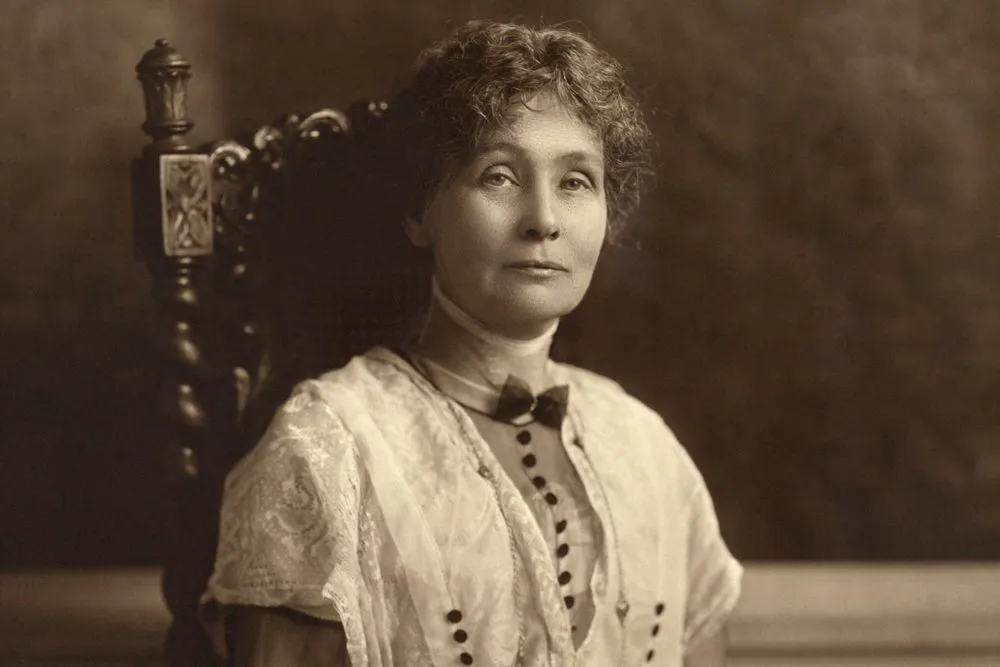
In 1913 after Suffragette Emily Davison stepped in front of King George V’s horse at the Epsom Derby and suffered fatal injuries, Emmeline Pankhurst delivered her speech to Connecticut as a call to action for people to support the suffragette movement. Her fortitude in delivering such a sobering speech on the state of women’s rights is worth remembering for its invaluable impact and contributions to the rights we enjoy in today’s world.
Help me use the structure of "Freedom or Death" (Emmeline Pankhurst, 1913) in a work presentation.

The device: use the audience's own history. In the speech, she points to what the audience itself once did to win, then asks why her cause should be judged differently.

Audience: [your audience]
One message: [your one message]
Ask: [what you want them to do]

Find a past decision or success this audience is proud of and show in three sentences how my proposal follows the same logic.

Keep to my facts and my own plain voice. Do not quote or imitate the speaker.
23. Quit India by Mahatma Gandhi
“We shall either free India or die in the attempt; we shall not live to see the perpetuation of our slavery. Every true Congressman or woman will join the struggle with an inflexible determination not to remain alive to see the country in bondage and slavery. Let that be your pledge. Keep jails out of your consideration. If the Government keep me free, I will not put on the Government the strain of maintaining a large number of prisoners at a time, when it is in trouble. Let every man and woman live every moment of his or her life hereafter in the consciousness that he or she eats or lives for achieving freedom and will die, if need be, to attain that goal. Take a pledge, with God and your own conscience as witness, that you will no longer rest till freedom is achieved and will be prepared to lay down your lives in the attempt to achieve it. He who loses his life will gain it; he who will seek to save it shall lose it. Freedom is not for the coward or the faint-hearted.”
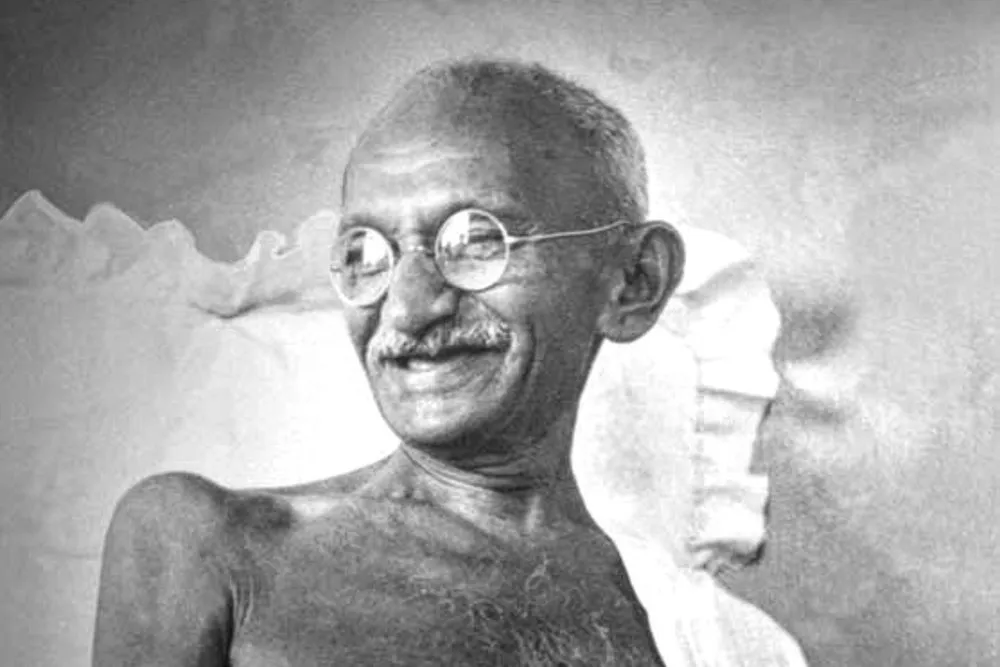
Naturally, the revolutionary activist Gandhi had to appear in this list for his impassioned anti-colonial speeches which rallied Indians towards independence. Famous for leading non-violent demonstrations, his speeches were a key element in gathering Indians of all backgrounds together for the common cause of eliminating their colonial masters. His speeches were resolute, eloquent, and courageous, inspiring the hope and admiration of many not just within India, but around the world.
Help me use the structure of "Quit India" (Mahatma Gandhi, 1942) in a work presentation.

The device: the pledge. In the speech, he states a stark choice and asks the audience to adopt it as their own commitment.

Audience: [your audience]
One message: [your one message]
Ask: [what you want them to do]

Write a short commitment statement my audience can say yes to at the end, with one clear choice and what happens next.

Keep to my facts and my own plain voice. Do not quote or imitate the speaker.
24. 1974 National Book Award Speech by Adrienne Rich, Alice Walker, Audre Lorde
“The statement I am going to read was prepared by three of the women nominated for the National Book Award for poetry, with the agreement that it would be read by whichever of us, if any, was chosen.We, Audre Lorde, Adrienne Rich, and Alice Walker, together accept this award in the name of all the women whose voices have gone and still go unheard in a patriarchal world, and in the name of those who, like us, have been tolerated as token women in this culture, often at great cost and in great pain. We believe that we can enrich ourselves more in supporting and giving to each other than by competing against each other; and that poetry—if it is poetry—exists in a realm beyond ranking and comparison. We symbolically join together here in refusing the terms of patriarchal competition and declaring that we will share this prize among us, to be used as best we can for women. We appreciate the good faith of the judges for this award, but none of us could accept this money for herself, nor could she let go unquestioned the terms on which poets are given or denied honor and livelihood in this world, especially when they are women. We dedicate this occasion to the struggle for self-determination of all women, of every color, identification, or derived class: the poet, the housewife, the lesbian, the mathematician, the mother, the dishwasher, the pregnant teen-ager, the teacher, the grandmother, the prostitute, the philosopher, the waitress, the women who will understand what we are doing here and those who will not understand yet; the silent women whose voices have been denied us, the articulate women who have given us strength to do our work.”
Adrienne Rich, Audre Lorde, and Alice Walker wrote this joint speech to be delivered by Adrienne Rich at the 1974 National Book Awards, based on their suspicions that the first few African American lesbian women to be nominated for the awards would be snubbed in favour of a white woman nominee. Their suspicions were confirmed, and Adrienne Rich delivered this socially significant speech in solidarity with her fellow nominees, upholding the voices of the ‘silent women whose voices have been denied’.
Help me use the structure of "1974 National Book Award Speech" (Adrienne Rich, Alice Walker and Audre Lorde, 1974) in a work presentation.

The device: speaking as "we". In the speech, the speakers state a shared decision on behalf of a group and say who it is for.

Audience: [your audience]
One message: [your one message]
Ask: [what you want them to do]

Rewrite my key message as a joint statement from my team, saying who we speak for, what we have decided and what it means for them.

Keep to my facts and my own plain voice. Do not quote or imitate the speaker.
25. Speech to 20th Congress of the CPSU by Nikita Khrushchev
“Considering the question of the cult of an individual, we must first of all show everyone what harm this caused to the interests of our Party.
Vladimir Ilyich Lenin had always stressed the Party’s role and significance in the direction of the socialist government of workers and peasants; he saw in this the chief precondition for a successful building of socialism in our country. Pointing to the great responsibility of the Bolshevik Party, as ruling Party of the Soviet state, Lenin called for the most meticulous observance of all norms of Party life; he called for the realization of the principles of collegiality in the direction of the Party and the state.
Collegiality of leadership flows from the very nature of our Party, a Party built on the principles of democratic centralism. “This means,” said Lenin, “that all Party matters are accomplished by all Party members – directly or through representatives – who, without any exceptions, are subject to the same rules; in addition, all administrative members, all directing collegia, all holders of Party positions are elective, they must account for their activities and are recallable.””
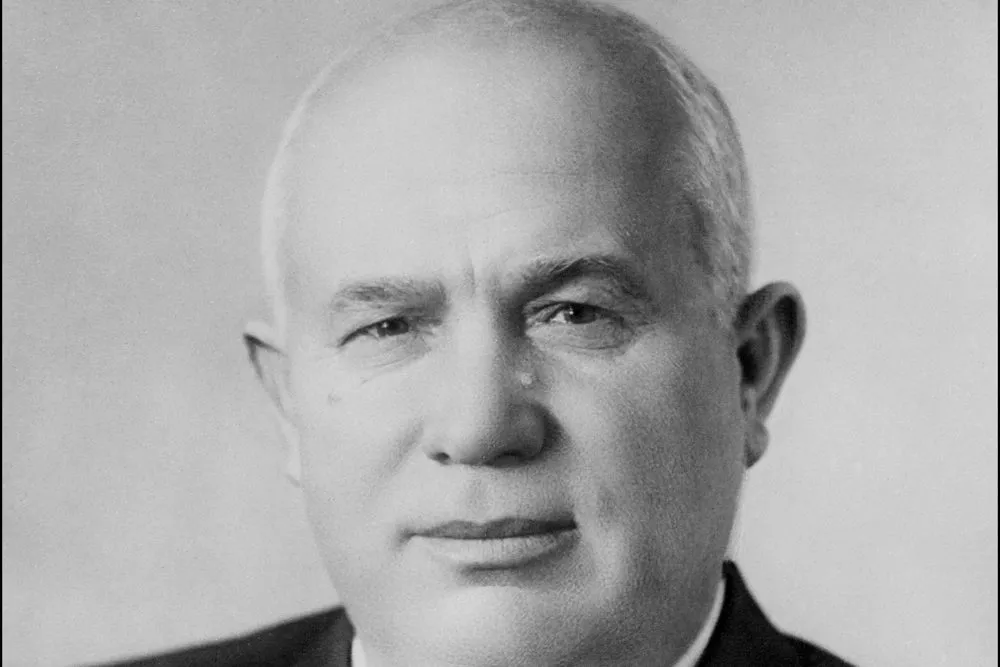
This speech is possibly the most famed Russian speech for its status as a ‘secret’ speech delivered only to the CPSU at the time, which was eventually revealed to the public. Given the unchallenged political legacy and cult of personality which Stalin left in the Soviet Union, Nikita Khrushchev’s speech condemning the authoritarian means Stalin had resorted to to consolidate power as un-socialist was an important mark in Russian history.
Help me use the structure of "Speech to 20th Congress of the CPSU" (Nikita Khrushchev, 1956) in a work presentation.

The device: appeal to a shared authority. In the speech, he uses a source his audience already respects to support a change they might resist.

Audience: [your audience]
One message: [your one message]
Ask: [what you want them to do]

Identify a principle, policy or leader my audience already respects and show how it supports my recommendation, with the exact reference I give you.

Keep to my facts and my own plain voice. Do not quote or imitate the speaker.
26. The Struggle for Human Rights by Eleanor Roosevelt
An excerpt of the 1948 Sorbonne address, not the full speech.
“It is my belief, and I am sure it is also yours, that the struggle for democracy and freedom is a critical struggle, for their preservation is essential to the great objective of the United Nations to maintain international peace and security. Among free men the end cannot justify the means. We know the patterns of totalitarianism — the single political party, the control of schools, press, radio, the arts, the sciences, and the church to support autocratic authority; these are the age-old patterns against which men have struggled for three thousand years. These are the signs of reaction, retreat, and retrogression. The United Nations must hold fast to the heritage of freedom won by the struggle of its people; it must help us to pass it on to generations to come.
The development of the ideal of freedom and its translation into the everyday life of the people in great areas of the earth is the product of the efforts of many peoples. It is the fruit of a long tradition of vigorous thinking and courageous action. No one race and on one people can claim to have done all the work to achieve greater dignity for human beings and great freedom to develop human personality. In each generation and in each country there must be a continuation of the struggle and new steps forward must be taken since this is preeminently a field in which to stand still is to retreat.”
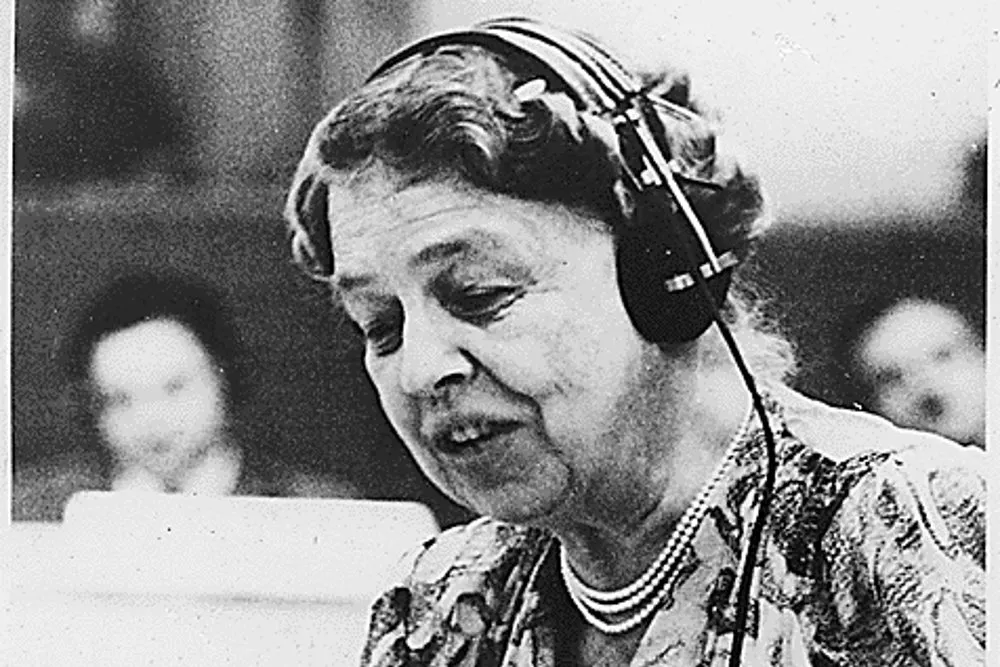
Eleanor Roosevelt has been among the most well-loved First Ladies for good reason: her eloquence and gravitas in delivering every speech convinced everyone of her suitability for the oval office. In this determined and articulate speech, she outlines the fundamental values that form the bedrock of democracy, urging the rest of the world to uphold human rights regardless of national ideology and interests.
Help me use the structure of "The Struggle for Human Rights" (Eleanor Roosevelt, 1948) in a work presentation.

The device: shared belief first. In the speech, she opens with a belief she assumes the audience shares, then names the patterns that threaten it.

Audience: [your audience]
One message: [your one message]
Ask: [what you want them to do]

Write an opening that states a value my audience and I share, then list the warning signs that put that value at risk in our situation.

Keep to my facts and my own plain voice. Do not quote or imitate the speaker.
27. The Ballot or The Bullet by Malcolm X
“And in this manner, the organizations will increase in number and in quantity and in quality, and by August, it is then our intention to have a black nationalist convention which will consist of delegates from all over the country who are interested in the political, economic and social philosophy of black nationalism. After these delegates convene, we will hold a seminar; we will hold discussions; we will listen to everyone. We want to hear new ideas and new solutions and new answers. And at that time, if we see fit then to form a black nationalist party, we’ll form a black nationalist party. If it’s necessary to form a black nationalist army, we’ll form a black nationalist army. It’ll be the ballot or the bullet. It’ll be liberty or it’ll be death.”
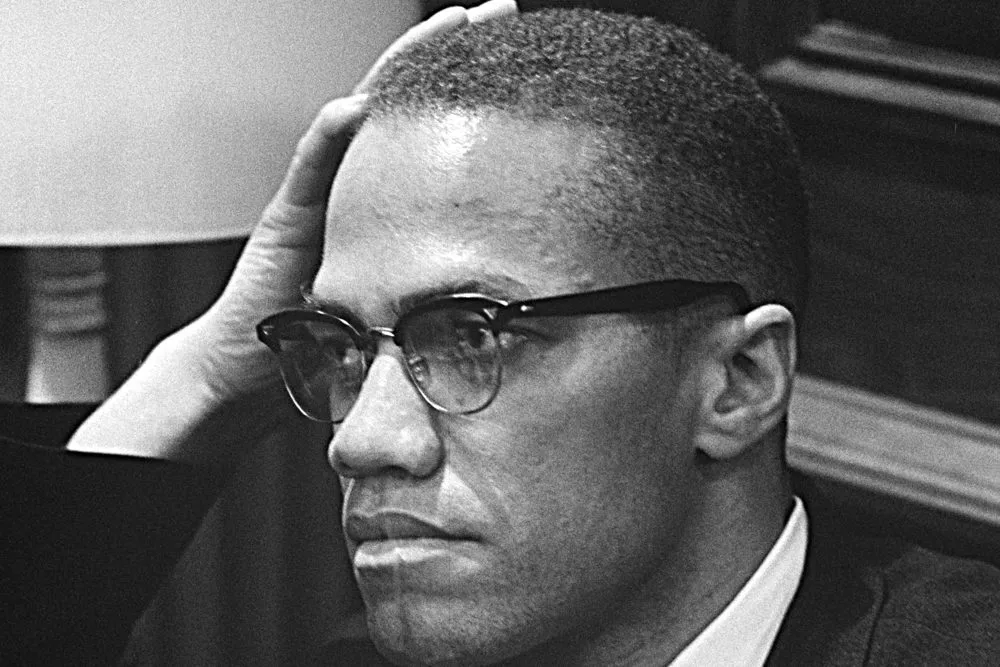
Inarguably, the revolutionary impact Malcolm X’s fearless oratory had was substantial in his time as a radical anti-racist civil rights activist. His speeches’ emancipatory potential put forth his ‘theory of rhetorical action’ where he urges Black Americans to employ both the ballot and the bullet, strategically without being dependent on the other should the conditions of oppression change. A crucial leader in the fight for civil rights, he opened the eyes of thousands of Black Americans, politicising and convincing them of the necessity of fighting for their democratic rights against white supremacists.
Help me use the structure of "The Ballot or The Bullet" (Malcolm X, 1964) in a work presentation.

The device: stark binary close. In the speech, the speech ends on two paired choices that leave no middle ground.

Audience: [your audience]
One message: [your one message]
Ask: [what you want them to do]

Write a closing that frames the decision as two clear options and what each one leads to, using only the options I describe.

Keep to my facts and my own plain voice. Do not quote or imitate the speaker.
28. Living the Revolution by Gloria Steinem
“The challenge to all of us, and to you men and women who are graduating today, is to live a revolution, not to die for one. There has been too much killing, and the weapons are now far too terrible. This revolution has to change consciousness, to upset the injustice of our current hierarchy by refusing to honor it, and to live a life that enforces a new social justice.
Because the truth is none of us can be liberated if other groups are not.”

In an unexpected commencement speech delivered at Vassar College in 1970, Gloria Steinem boldly makes a call to action on behalf of marginalized groups in need of liberation to newly graduated students. She proclaimed it the year of Women’s Liberation and forcefully highlighted the need for a social revolution to ‘upset the injustice of the current hierarchy’ in favour of human rights, echoing the hard-hitting motto on social justice, ‘until all of us are free, none of us are free’.
Help me use the structure of "Living the Revolution" (Gloria Steinem, 1970) in a work presentation.

The device: antithesis. In the speech, she sets two similar phrases against each other so the difference carries the point.

Audience: [your audience]
One message: [your one message]
Ask: [what you want them to do]

Write three versions of one line that contrasts the old way and the new way of doing this work, in under 15 words each.

Keep to my facts and my own plain voice. Do not quote or imitate the speaker.
29. The Last Words of Harvey Milk by Harvey Milk
“I cannot prevent some people from feeling angry and frustrated and mad in response to my death, but I hope they will take the frustration and madness and instead of demonstrating or anything of that type, I would hope that they would take the power and I would hope that five, ten, one hundred, a thousand would rise. I would like to see every gay lawyer, every gay architect come out, stand up and let the world know. That would do more to end prejudice overnight than anybody could imagine. I urge them to do that, urge them to come out. Only that way will we start to achieve our rights. … All I ask is for the movement to continue, and if a bullet should enter my brain, let that bullet destroy every closet door…”
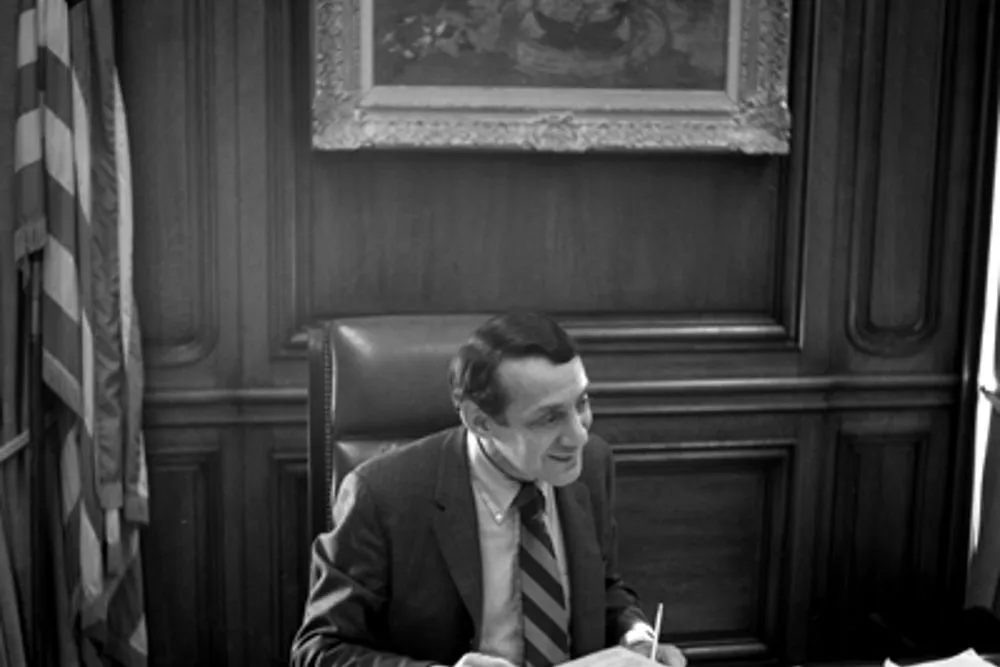
As the first openly gay elected official in the history of California, Harvey Milk’s entire political candidature was in itself a radical statement against the homophobic status quo at the time. Given the dangerous times he was in as an openly gay man, he anticipated that he would be assassinated eventually in his political career. As such, these are some of his last words which show the utter devotion he had to campaigning against homophobia while representing the American people, voicing his heartbreaking wish for the bullet that would eventually kill him to ‘destroy every closet door’.
Help me use the structure of "The Last Words of Harvey Milk" (Harvey Milk, 1977) in a work presentation.

The device: call to action by role. In the speech, he names specific groups of people and asks each to take the same visible step.

Audience: [your audience]
One message: [your one message]
Ask: [what you want them to do]

Name the roles in my audience and write one sentence per role saying exactly what I need that person to do next.

Keep to my facts and my own plain voice. Do not quote or imitate the speaker.
30. Black Power Address at UC Berkeley by Stokely Carmichael
“Now we are now engaged in a psychological struggle in this country, and that is whether or not black people will have the right to use the words they want to use without white people giving their sanction to it; and that we maintain, whether they like it or not, we gonna use the word “Black Power” — and let them address themselves to that; but that we are not going to wait for white people to sanction Black Power. We’re tired waiting; every time black people move in this country, they’re forced to defend their position before they move. It’s time that the people who are supposed to be defending their position do that. That’s white people. They ought to start defending themselves as to why they have oppressed and exploited us.”
A forceful and impressive orator, Stokely Carmichael was among those at the forefront of the civil rights movement, who was a vigorous socialist organizer as well. He led the Black Power movement wherein he gave this urgent, influential speech that propelled Black Americans forward in their fight for constitutional rights in the 1960s.
Help me use the structure of "Black Power Address at UC Berkeley" (Stokely Carmichael, 1966) in a work presentation.

The device: shift the burden of proof. In the speech, he argues it is the other side that should have to justify its position.

Audience: [your audience]
One message: [your one message]
Ask: [what you want them to do]

Help me reframe the discussion so the current approach has to justify itself, with the questions it would need to answer.

Keep to my facts and my own plain voice. Do not quote or imitate the speaker.
31. Speech on Vietnam by Lyndon Johnson
“The true peace-keepers are those men who stand out there on the DMZ at this very hour, taking the worst that the enemy can give. The true peace-keepers are the soldiers who are breaking the terrorist’s grip around the villages of Vietnam—the civilians who are bringing medical care and food and education to people who have already suffered a generation of war.
And so I report to you that we are going to continue to press forward. Two things we must do. Two things we shall do.
First, we must not mislead the enemy. Let him not think that debate and dissent will produce wavering and withdrawal. For I can assure you they won’t. Let him not think that protests will produce surrender. Because they won’t. Let him not think that he will wait us out. For he won’t.
Second, we will provide all that our brave men require to do the job that must be done. And that job is going to be done.
These gallant men have our prayers-have our thanks—have our heart-felt praise—and our deepest gratitude.
Let the world know that the keepers of peace will endure through every trial—and that with the full backing of their countrymen, they are going to prevail.”
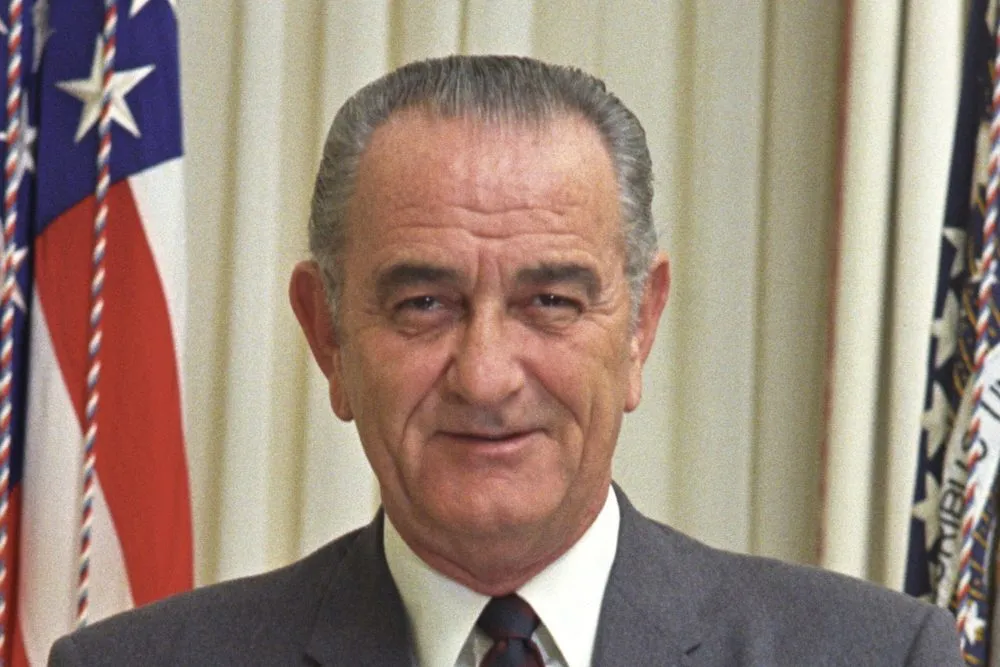
During some of the most harrowing periods of human history, the Vietnam War, American soldiers were getting soundly defeated by the Vietnamese in guerrilla warfare. President Lyndon Johnson then issued this dignified, consolatory speech to encourage patriotism and support for the soldiers putting their lives on the line for the nation.
Help me use the structure of "Speech on Vietnam" (Lyndon B Johnson, 1960s) in a work presentation.

The device: announced structure. In the speech, he says how many points he has, then delivers them as first and second, with repeated warnings inside.

Audience: [your audience]
One message: [your one message]
Ask: [what you want them to do]

Turn my content into exactly two or three numbered points, announced up front, with one short repeated line inside the most important point.

Keep to my facts and my own plain voice. Do not quote or imitate the speaker.
32. A Whisper of AIDS by Mary Fisher
“We may take refuge in our stereotypes, but we cannot hide there long, because HIV asks only one thing of those it attacks. Are you human? And this is the right question. Are you human? Because people with HIV have not entered some alien state of being. They are human. They have not earned cruelty, and they do not deserve meanness. They don’t benefit from being isolated or treated as outcasts. Each of them is exactly what God made: a person; not evil, deserving of our judgment; not victims, longing for our pity people, ready for support and worthy of compassion.
We must be consistent if we are to be believed. We cannot love justice and ignore prejudice, love our children and fear to teach them. Whatever our role as parent or policymaker, we must act as eloquently as we speak else we have no integrity. My call to the nation is a plea for awareness. If you believe you are safe, you are in danger. Because I was not hemophiliac, I was not at risk. Because I was not gay, I was not at risk. Because I did not inject drugs, I was not at risk.
The lesson history teaches is this: If you believe you are safe, you are at risk. If you do not see this killer stalking your children, look again. There is no family or community, no race or religion, no place left in America that is safe. Until we genuinely embrace this message, we are a nation at risk.”
Back when AIDS research was still undeveloped, the stigma of contracting HIV was even more immense than it is today. A celebrated artist, author and speaker, Mary Fisher became an outspoken activist for those with HIV/AIDS, persuading people to extend compassion to the population with HIV instead of stigmatizing them, as injustice has a way of coming around to people eventually. Her bold act of speaking out for the community regardless of the way they contracted the disease, their sexual orientation or social group, was an influential move in advancing the human rights of those with HIV and spreading awareness on the discrimination they face.
Help me use the structure of "A Whisper of AIDS" (Mary Fisher, 1992) in a work presentation.

The device: one question, asked again. In the speech, a single short question is repeated until it becomes the frame for the whole argument.

Audience: [your audience]
One message: [your one message]
Ask: [what you want them to do]

Write the one question my presentation should make the audience ask themselves, and show where to repeat it in my opening, middle and close.

Keep to my facts and my own plain voice. Do not quote or imitate the speaker.
33. Freedom from Fear by Aung San Suu Kyi
“The quintessential revolution is that of the spirit, born of an intellectual conviction of the need for change in those mental attitudes and values which shape the course of a nation’s development. A revolution which aims merely at changing official policies and institutions with a view to an improvement in material conditions has little chance of genuine success. Without a revolution of the spirit, the forces which produced the iniquities of the old order would continue to be operative, posing a constant threat to the process of reform and regeneration. It is not enough merely to call for freedom, democracy and human rights. There has to be a united determination to persevere in the struggle, to make sacrifices in the name of enduring truths, to resist the corrupting influences of desire, ill will, ignorance and fear.
Saints, it has been said, are the sinners who go on trying. So free men are the oppressed who go on trying and who in the process make themselves fit to bear the responsibilities and to uphold the disciplines which will maintain a free society. Among the basic freedoms to which men aspire that their lives might be full and uncramped, freedom from fear stands out as both a means and an end. A people who would build a nation in which strong, democratic institutions are firmly established as a guarantee against state-induced power must first learn to liberate their own minds from apathy and fear.”

Famous for her resoluteness and fortitude in campaigning for democracy in Burma despite being put under house arrest by the military government, Aung San Suu Kyi’s speeches have been widely touted as inspirational. In this renowned speech of hers, she delivers a potent message to Burmese to ‘liberate their minds from apathy and fear’ in the struggle for freedom and human rights in the country. To this day, she continues to tirelessly champion the welfare and freedom of Burmese in a state still overcome by vestiges of authoritarian rule.
Help me use the structure of "Freedom from Fear" (Aung San Suu Kyi, 1990) in a work presentation.

The device: the problem beneath the problem. In the speech, she argues that changing visible policies will fail without changing the attitudes underneath.

Audience: [your audience]
One message: [your one message]
Ask: [what you want them to do]

Separate the visible problem from the underlying cause in my topic, and write a paragraph that shows why fixing only the first will not last.

Keep to my facts and my own plain voice. Do not quote or imitate the speaker.
34. This Is Water by David Foster Wallace
“Our own present culture has harnessed these forces in ways that have yielded extraordinary wealth and comfort and personal freedom. The freedom all to be lords of our tiny skull-sized kingdoms, alone at the centre of all creation. This kind of freedom has much to recommend it. But of course there are all different kinds of freedom, and the kind that is most precious you will not hear much talk about much in the great outside world of wanting and achieving…. The really important kind of freedom involves attention and awareness and discipline, and being able truly to care about other people and to sacrifice for them over and over in myriad petty, unsexy ways every day.
That is real freedom. That is being educated, and understanding how to think. The alternative is unconsciousness, the default setting, the rat race, the constant gnawing sense of having had, and lost, some infinite thing.”
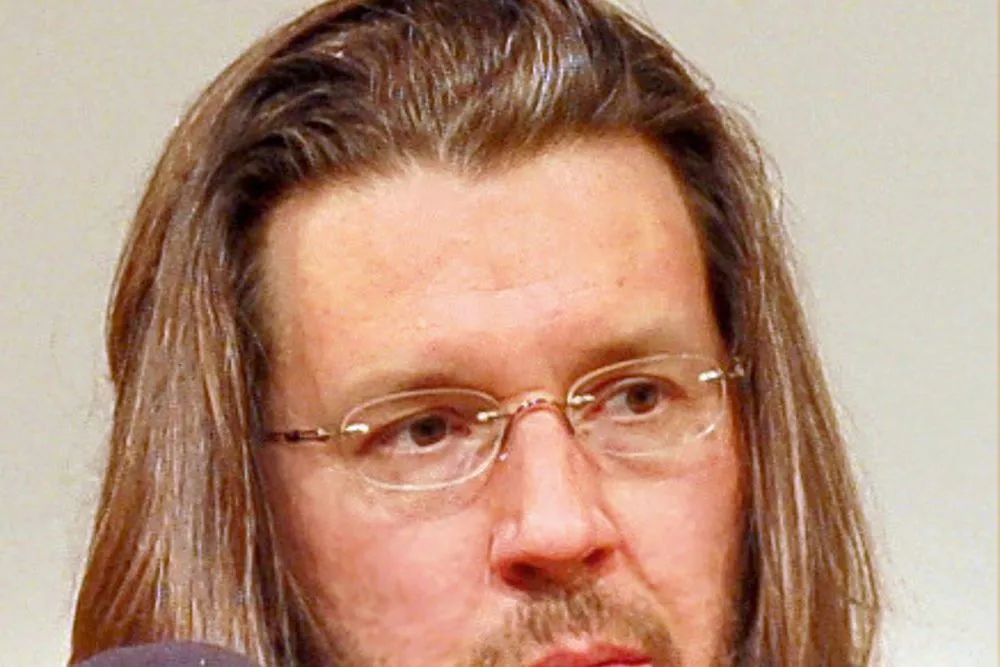
Esteemed writer David Foster Wallace gave a remarkably casual yet wise commencement speech at Kenyon College in 2005 on the importance of learning to think beyond attaining a formal education. He encouraged hundreds of students to develop freedom of thought, a heart of sacrificial care for those in need of justice, and a consciousness that would serve them in discerning the right choices to make within a status quo that is easy to fall in line with. His captivating speech on what it meant to truly be ‘educated’ tugged at the hearts of many young and critical minds striving to achieve their dreams and change the world.
Help me use the structure of "This Is Water" (David Foster Wallace, 2005) in a work presentation.

The device: concede the upside, then show the cost. In the speech, he grants what is good about the current way of living, then shows what it costs.

Audience: [your audience]
One message: [your one message]
Ask: [what you want them to do]

Write two sentences that fairly credit the current approach, then two that show its hidden cost to this audience.

Keep to my facts and my own plain voice. Do not quote or imitate the speaker.
35. Questioning the Universe by Stephen Hawking
“This brings me to the last of the big questions: the future of the human race. If we are the only intelligent beings in the galaxy, we should make sure we survive and continue. But we are entering an increasingly dangerous period of our history. Our population and our use of the finite resources of planet Earth are growing exponentially, along with our technical ability to change the environment for good or ill. But our genetic code still carries the selfish and aggressive instincts that were of survival advantage in the past. It will be difficult enough to avoid disaster in the next hundred years, let alone the next thousand or million.
Our only chance of long-term survival is not to remain inward-looking on planet Earth, but to spread out into space. The answers to these big questions show that we have made remarkable progress in the last hundred years. But if we want to continue beyond the next hundred years, our future is in space. That is why I am in favor of manned — or should I say, personned — space flight.”

Extraordinary theoretical physicist, cosmologist, and author Stephen Hawking was a considerable influence upon modern physics and scientific research at large, inspiring people regardless of physical ability to aspire towards expanding knowledge in the world. In his speech on Questioning the Universe, he speaks of the emerging currents and issues in the scientific world like that of outer space, raising and answering big questions that have stumped great thinkers for years.
Help me use the structure of "Questioning the Universe" (Stephen Hawking, 2008) in a work presentation.

The device: big question, trend, one way forward. In the speech, he poses a large question, shows the trend that makes it urgent, then gives one answer.

Audience: [your audience]
One message: [your one message]
Ask: [what you want them to do]

Structure my talk as one big question, the trend in our data that makes it urgent, and the single recommendation that follows.

Keep to my facts and my own plain voice. Do not quote or imitate the speaker.
36. 2008 Democratic National Convention Speech by Michelle Obama
“I stand here today at the crosscurrents of that history — knowing that my piece of the American dream is a blessing hard won by those who came before me. All of them driven by the same conviction that drove my dad to get up an hour early each day to painstakingly dress himself for work. The same conviction that drives the men and women I’ve met all across this country:
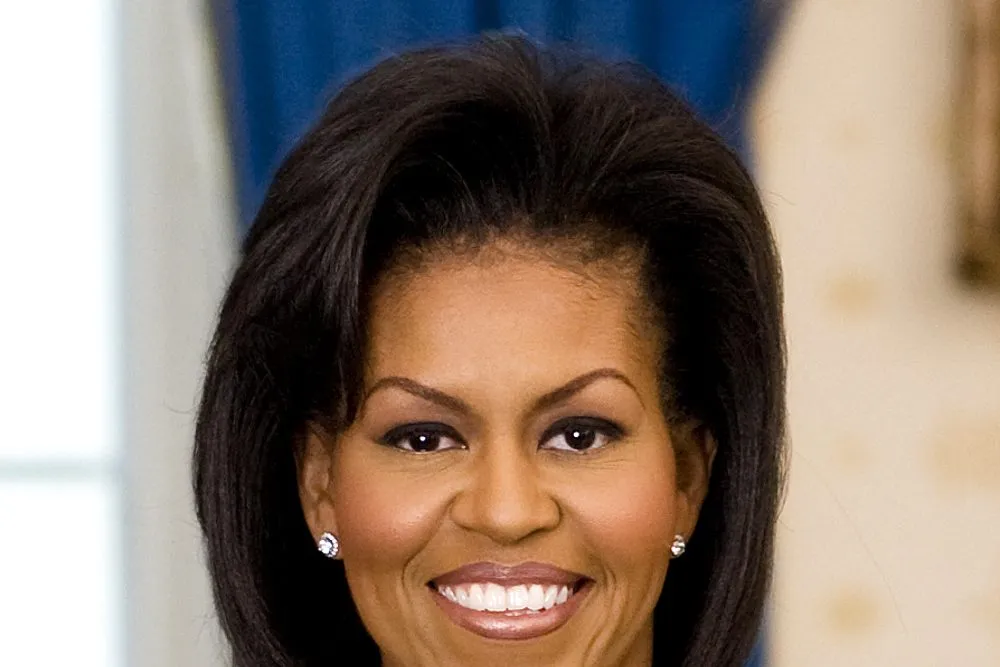
People who work the day shift, kiss their kids goodnight, and head out for the night shift — without disappointment, without regret — that goodnight kiss a reminder of everything they’re working for.
The military families who say grace each night with an empty seat at the table. The servicemen and women who love this country so much, they leave those they love most to defend it.
The young people across America serving our communities — teaching children, cleaning up neighborhoods, caring for the least among us each and every day.
People like Hillary Clinton, who put those 18 million cracks in the glass ceiling, so that our daughters — and sons — can dream a little bigger and aim a little higher.
People like Joe Biden, who’s never forgotten where he came from and never stopped fighting for folks who work long hours and face long odds and need someone on their side again.
All of us driven by a simple belief that the world as it is just won’t do — that we have an obligation to fight for the world as it should be.
That is the thread that connects our hearts. That is the thread that runs through my journey and Barack’s journey and so many other improbable journeys that have brought us here tonight, where the current of history meets this new tide of hope.
That is why I love this country.”
Ever the favourite modern First Lady of America, Michelle Obama has delivered an abundance of iconic speeches in her political capacity, never forgetting to foreground the indomitable human spirit embodied in American citizens’ everyday lives and efforts towards a better world. The Obamas might just have been the most articulate couple of rhetoricians of their time, making waves as the first African American president and First Lady while introducing important policies in their period of governance.
Help me use the structure of "2008 Democratic National Convention Speech" (Michelle Obama, 2008) in a work presentation.

The device: family detail as proof. In the speech, a small, specific detail about her father stands for a value the whole audience shares.

Audience: [your audience]
One message: [your one message]
Ask: [what you want them to do]

Help me find one small, true detail from my experience (I will give options) that shows the value behind my message, and write it in three sentences.

Keep to my facts and my own plain voice. Do not quote or imitate the speaker.
37. The Audacity of Hope by Barack Obama
“I’m not talking about blind optimism here — the almost willful ignorance that thinks unemployment will go away if we just don’t think about it, or the health care crisis will solve itself if we just ignore it. That’s not what I’m talking about. I’m talking about something more substantial. It’s the hope of slaves sitting around a fire singing freedom songs; the hope of immigrants setting out for distant shores; the hope of a young naval lieutenant bravely patrolling the Mekong Delta; the hope of a millworker’s son who dares to defy the odds; the hope of a skinny kid with a funny name who believes that America has a place for him, too.
Hope — Hope in the face of difficulty. Hope in the face of uncertainty. The audacity of hope!
In the end, that is God’s greatest gift to us, the bedrock of this nation. A belief in things not seen. A belief that there are better days ahead.”
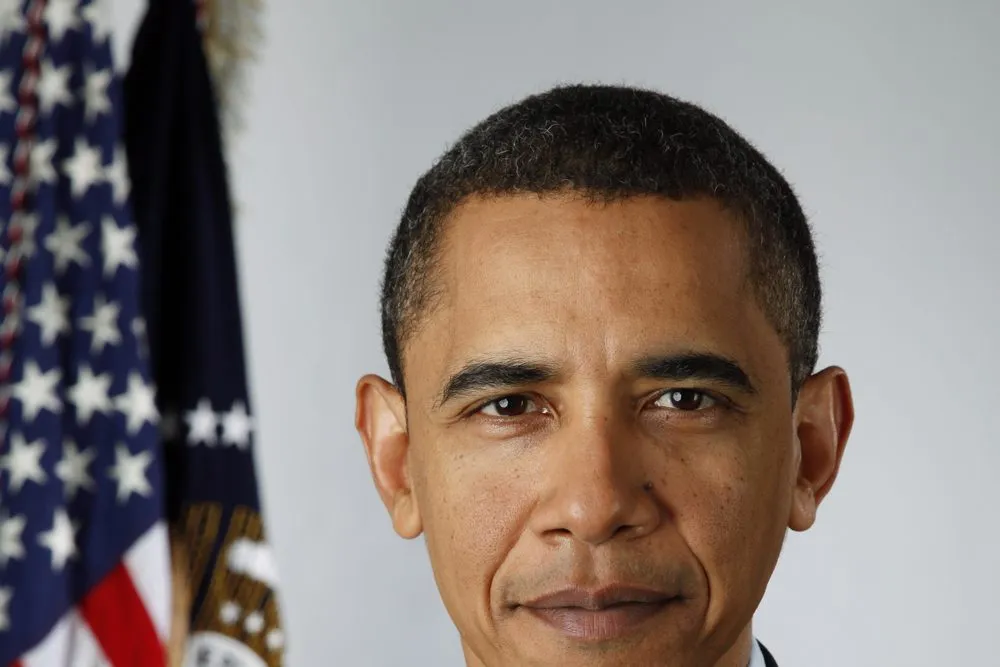
Now published into a book, Barack Obama’s heart-capturing personal story of transformational hope was first delivered as a speech on the merits of patriotic optimism and determination put to the mission of concrete change. He has come to be known as one of the most favoured and inspiring presidents in American history, and arguably the most skilled orators ever.
Help me use the structure of "The Audacity of Hope" (Barack Obama, 2004) in a work presentation.

The device: defining by exclusion. In the speech, he says what he does not mean first, so the meaning he wants is sharper.

Audience: [your audience]
One message: [your one message]
Ask: [what you want them to do]

Define the key term in my message by first ruling out the two ways people misread it, then stating what I mean in one sentence.

Keep to my facts and my own plain voice. Do not quote or imitate the speaker.
38. “Be Your Own Story” by Toni Morrison
“But I’m not going to talk anymore about the future because I’m hesitant to describe or predict because I’m not even certain that it exists. That is to say, I’m not certain that somehow, perhaps, a burgeoning ménage a trois of political interests, corporate interests and military interests will not prevail and literally annihilate an inhabitable, humane future. Because I don’t think we can any longer rely on separation of powers, free speech, religious tolerance or unchallengeable civil liberties as a matter of course. That is, not while finite humans in the flux of time make decisions of infinite damage. Not while finite humans make infinite claims of virtue and unassailable power that are beyond their competence, if not their reach. So, no happy talk about the future.
…
Because the past is already in debt to the mismanaged present. And besides, contrary to what you may have heard or learned, the past is not done and it is not over, it’s still in process, which is another way of saying that when it’s critiqued, analyzed, it yields new information about itself. The past is already changing as it is being reexamined, as it is being listened to for deeper resonances. Actually it can be more liberating than any imagined future if you are willing to identify its evasions, its distortions, its lies, and are willing to unleash its secrets.”
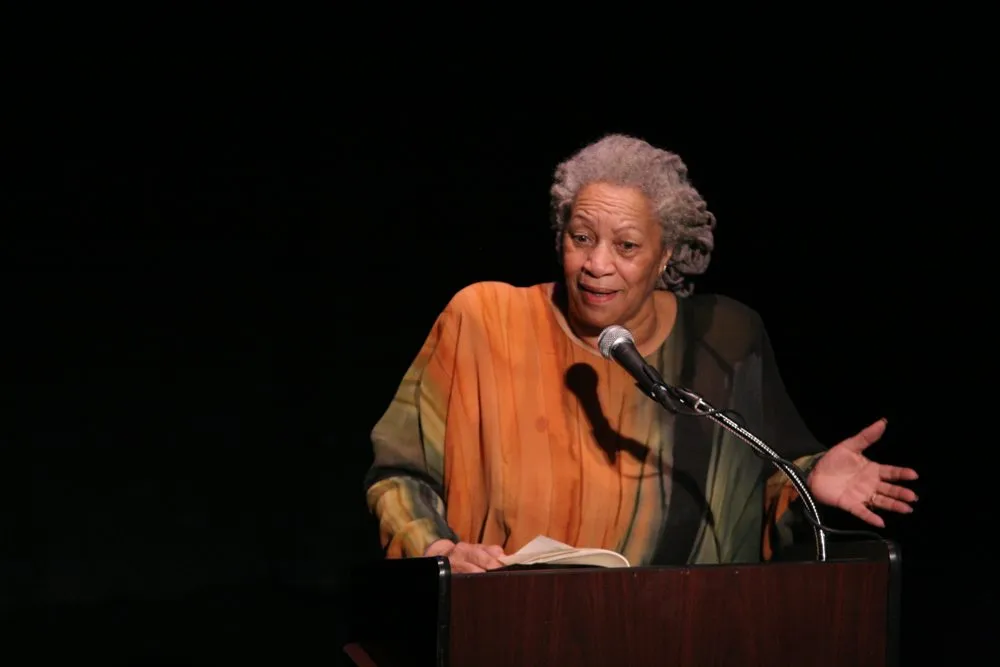
Venerated author and professor Toni Morrison delivered an impressively articulate speech at Wellesley College in 2004 to new graduates, bucking the trend by discussing the importance of the past in informing current and future ways of living. With her brilliance and eloquence, she blew the crowd away and renewed in them the capacity for reflection upon using the past as a talisman to guide oneself along the journey of life.
Help me use the structure of "Be Your Own Story" (Toni Morrison, 2004) in a work presentation.

The device: breaking the expected script. In the speech, she declines the topic the occasion expects and explains why, which makes the audience listen harder.

Audience: [your audience]
One message: [your one message]
Ask: [what you want them to do]

Name what this audience expects me to say, then write an opening that sets it aside and explains what I will talk about instead.

Keep to my facts and my own plain voice. Do not quote or imitate the speaker.
39. Nobel Speech by Malala Yousafzai
“Dear brothers and sisters, the so-called world of adults may understand it, but we children don’t. Why is it that countries which we call “strong” are so powerful in creating wars but so weak in bringing peace? Why is it that giving guns is so easy but giving books is so hard? Why is it that making tanks is so easy, but building schools is so difficult?
As we are living in the modern age, the 21st century and we all believe that nothing is impossible. We can reach the moon and maybe soon will land on Mars. Then, in this, the 21st century, we must be determined that our dream of quality education for all will also come true.
So let us bring equality, justice and peace for all. Not just the politicians and the world leaders, we all need to contribute. Me. You. It is our duty. So we must work … and not wait. I call upon my fellow children to stand up around the world. Dear sisters and brothers, let us become the first generation to decide to be the last. The empty classrooms, the lost childhoods, wasted potential-let these things end with us.”

At a mere 17 years of age, Malala Yousafzai gave a speech on the severity of the state of human rights across the world, and wowed the world with her passion for justice at her tender age. She displayed tenacity and fearlessness speaking about her survival of an assassination attempt for her activism for gender equality in the field of education. A model of courage to us all, her speech remains an essential one in the fight for human rights in the 21st century.
Help me use the structure of "Nobel Speech" (Malala Yousafzai, 2014) in a work presentation.

The device: paired-contrast questions. In the speech, a run of "why is it that" questions sets an easy thing against a hard thing each time.

Audience: [your audience]
One message: [your one message]
Ask: [what you want them to do]

Write three questions that each set something easy we already do against something harder we keep avoiding.

Keep to my facts and my own plain voice. Do not quote or imitate the speaker.
40. Final Commencement Speech by Michelle Obama
“If you are a person of faith, know that religious diversity is a great American tradition, too. In fact, that’s why people first came to this country — to worship freely. And whether you are Muslim, Christian, Jewish, Hindu, Sikh — these religions are teaching our young people about justice, and compassion, and honesty. So I want our young people to continue to learn and practice those values with pride. You see, our glorious diversity — our diversities of faiths and colors and creeds — that is not a threat to who we are, it makes us who we are. So the young people here and the young people out there: Do not ever let anyone make you feel like you don’t matter, or like you don’t have a place in our American story — because you do. And you have a right to be exactly who you are. But I also want to be very clear: This right isn’t just handed to you. No, this right has to be earned every single day. You cannot take your freedoms for granted. Just like generations who have come before you, you have to do your part to preserve and protect those freedoms.
…
It is our fundamental belief in the power of hope that has allowed us to rise above the voices of doubt and division, of anger and fear that we have faced in our own lives and in the life of this country. Our hope that if we work hard enough and believe in ourselves, then we can be whatever we dream, regardless of the limitations that others may place on us. The hope that when people see us for who we truly are, maybe, just maybe they, too, will be inspired to rise to their best possible selves.”
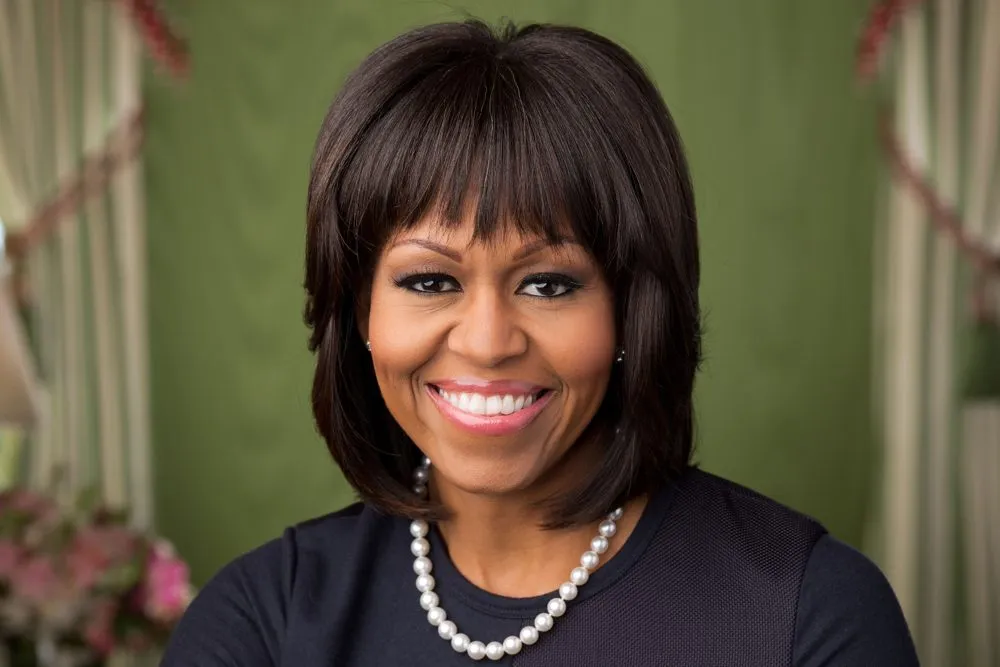
There is also Michelle Obama’s farewell address in January 2017, her final remarks as First Lady, a tear-inducing moment for many Americans and people well beyond the US. In that emotional close to her time in office, she gave young Americans an empowering, hopeful speech, urging them to take hold of the country’s future in all their diversity and to work hard at becoming their best possible selves.
Help me use the structure of "Final Commencement Speech" (Michelle Obama, 2017) in a work presentation.

The device: direct reassurance. In the speech, she speaks straight to one named group and tells them where they stand.

Audience: [your audience]
One message: [your one message]
Ask: [what you want them to do]

Write a short passage addressed directly to the group most affected by my proposal, telling them plainly what changes for them and what does not.

Keep to my facts and my own plain voice. Do not quote or imitate the speaker.
41. Pain as a Superpower by Jensen Huang
“I hope you will see setbacks as new opportunities. Your pain and suffering will strengthen your character, your resilience and agility, and they are the ultimate superpowers.”
Huang, who co-founded NVIDIA in a Denny’s booth and built it into the world’s most valuable chipmaker, gave this address at Caltech’s 130th commencement on 14 June 2024.
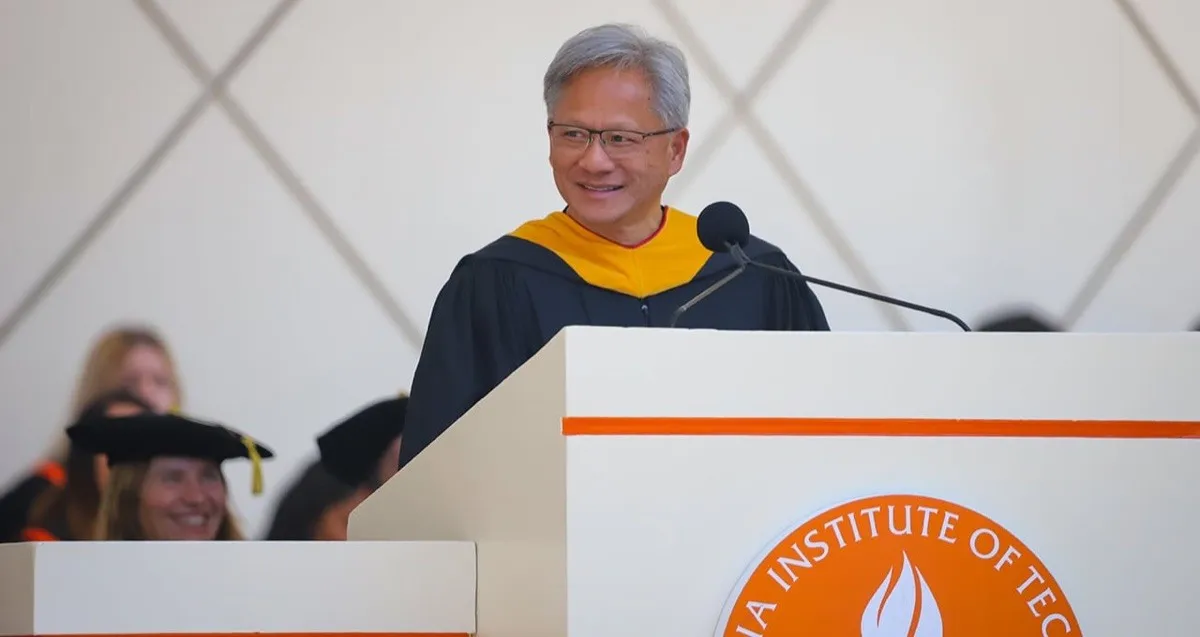
Watch Huang’s full Caltech address
Help me use the structure of "Pain as a Superpower" (Jensen Huang, 2024) in a work presentation.

The device: reframing the setback. In the speech, he recasts pain and setbacks as the source of strength.

Audience: [your audience]
One message: [your one message]
Ask: [what you want them to do]

Take the main setback in my material and reframe it in two sentences as the reason we are now better placed.

Keep to my facts and my own plain voice. Do not quote or imitate the speaker.
42. Stay Loose by Michelle Yeoh
“When falling, the tendency is to tighten up to brace for impact. But in truth, the safest thing one can do is remain calm, even curious, about the shifting world around you.”
Yeoh, the first Asian woman to win the Academy Award for Best Actress, gave the address at Harvard Law School’s Class Day on 24 May 2023.
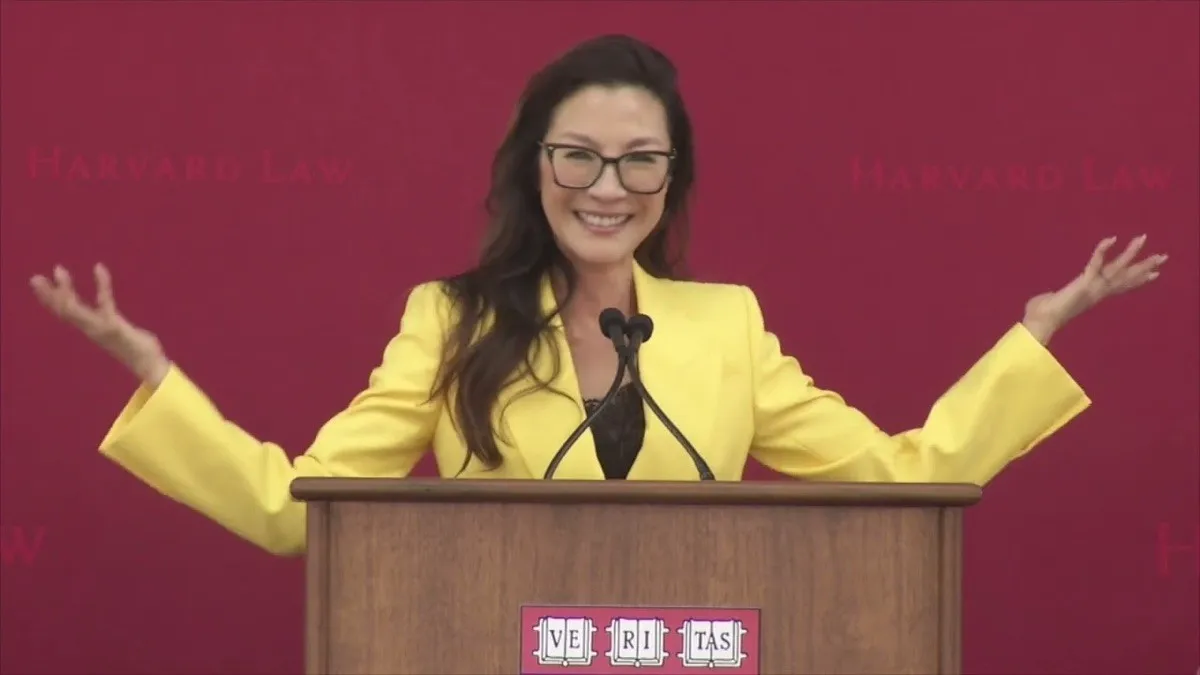
Watch Yeoh’s full Harvard Law address
Help me use the structure of "Stay Loose" (Michelle Yeoh, 2023) in a work presentation.

The device: a lesson from your own craft. In the speech, she uses something physical from her own work, how to fall, as a lesson for everyone.

Audience: [your audience]
One message: [your one message]
Ask: [what you want them to do]

Help me find an image from my own job or hobby that explains my message, and write it as a three-sentence analogy.

Keep to my facts and my own plain voice. Do not quote or imitate the speaker.
43. How Dare You by Greta Thunberg
“How dare you? You have stolen my dreams and my childhood with your empty words.”
She repeated “how dare you” as anaphora at the heads of state in the room, and within hours a sitting US president was mocking her online.
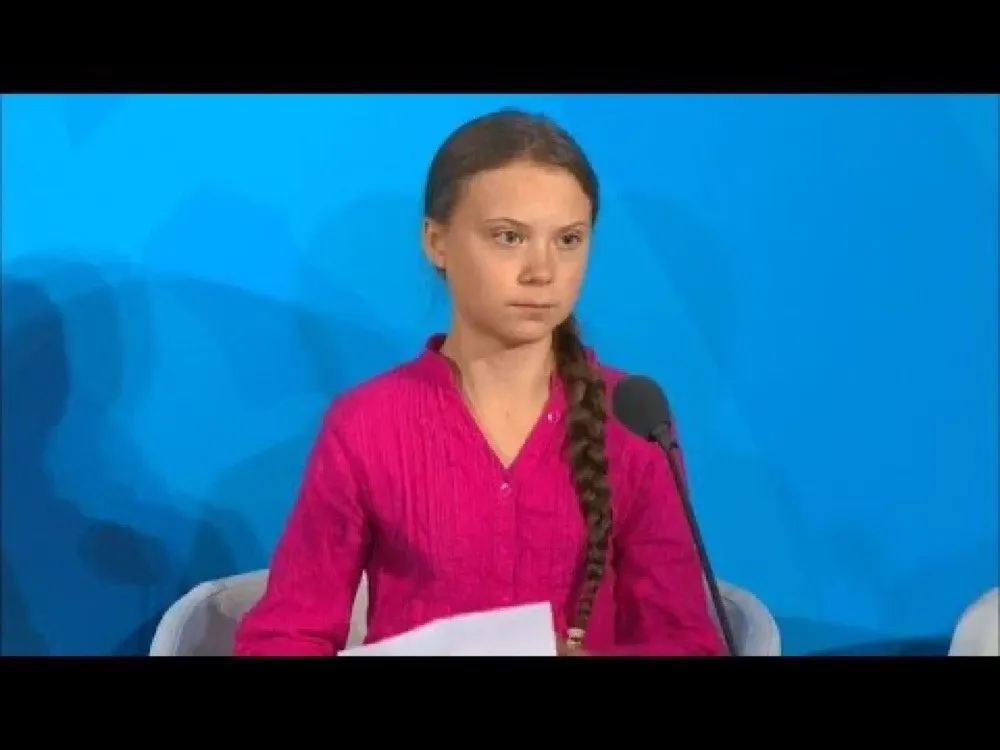
Watch Thunberg’s full UN address
Help me use the structure of "How Dare You" (Greta Thunberg, 2019) in a work presentation.

The device: repeated accusation. In the speech, one short charge is repeated directly at the people in the room.

Audience: [your audience]
One message: [your one message]
Ask: [what you want them to do]

Write one short line, under six words, that I could repeat at the key moments of my talk, and show where it goes.

Keep to my facts and my own plain voice. Do not quote or imitate the speaker.
44. The Hill We Climb by Amanda Gorman
“We will not march back to what was, but move to what shall be: a country that is bruised but whole, benevolent but bold, fierce and free.”
At 22, Gorman was the youngest inaugural poet in US history, reading to a National Mall filled with 200,000 flags instead of a crowd.
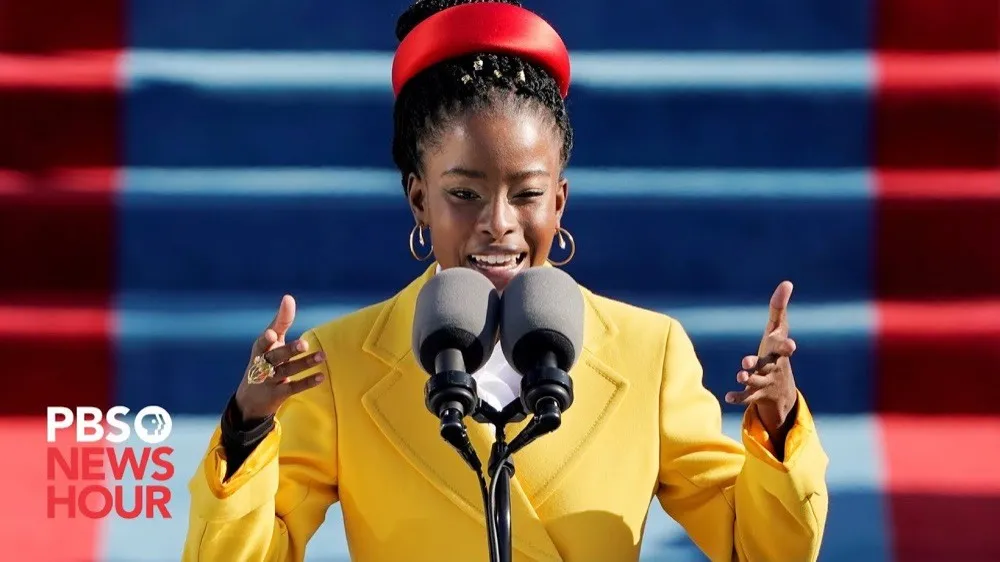
Watch Gorman’s full inauguration reading
Help me use the structure of "The Hill We Climb" (Amanda Gorman, 2021) in a work presentation.

The device: paired qualities. In the speech, she pairs words that pull in different directions, such as bruised but whole.

Audience: [your audience]
One message: [your one message]
Ask: [what you want them to do]

Describe where my team or project stands in three "X but Y" pairs that are honest about the problem and the strength.

Keep to my facts and my own plain voice. Do not quote or imitate the speaker.
45. A New Day Is on the Horizon by Oprah Winfrey
“So I want all the girls watching here, now, to know that a new day is on the horizon!”
Framed as a call to action rather than a policy line, it set off “Oprah 2020” speculation she spent two years batting down.
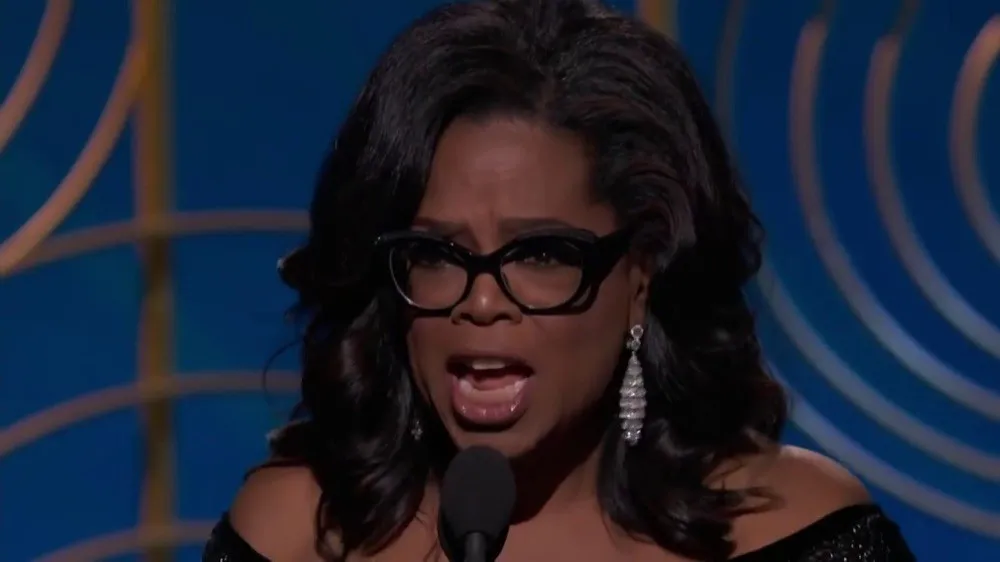
Watch Winfrey’s full Golden Globes speech
Help me use the structure of "A New Day Is on the Horizon" (Oprah Winfrey, 2018) in a work presentation.

The device: speaking past the room. In the speech, she addresses a group watching from outside the room, which widens what is at stake.

Audience: [your audience]
One message: [your one message]
Ask: [what you want them to do]

Name who outside the meeting will feel the result of this decision, and write two sentences that speak to them directly.

Keep to my facts and my own plain voice. Do not quote or imitate the speaker.
46. Purpose by Chadwick Boseman
“Purpose is an essential element of you. It is the reason you are on the planet at this particular time in history.”
Boseman was already living with the colon cancer that would take his life in 2020, a diagnosis the graduates in front of him did not know about.

Watch Boseman’s full Howard address
Help me use the structure of "Purpose" (Chadwick Boseman, 2018) in a work presentation.

The device: define one word. In the speech, he takes a single word and defines it in personal terms.

Audience: [your audience]
One message: [your one message]
Ask: [what you want them to do]

Pick the one word at the heart of my message and write a two-sentence definition of it that applies to this audience.

Keep to my facts and my own plain voice. Do not quote or imitate the speaker.
47. Your Money Is Not Charity by Volodymyr Zelensky
“Your money is not charity. It’s an investment in the global security and democracy that we handle in the most responsible way.”
Speaking in English to a joint session of Congress, he turned a funding request into a personal appeal by addressing lawmakers directly as “you”.
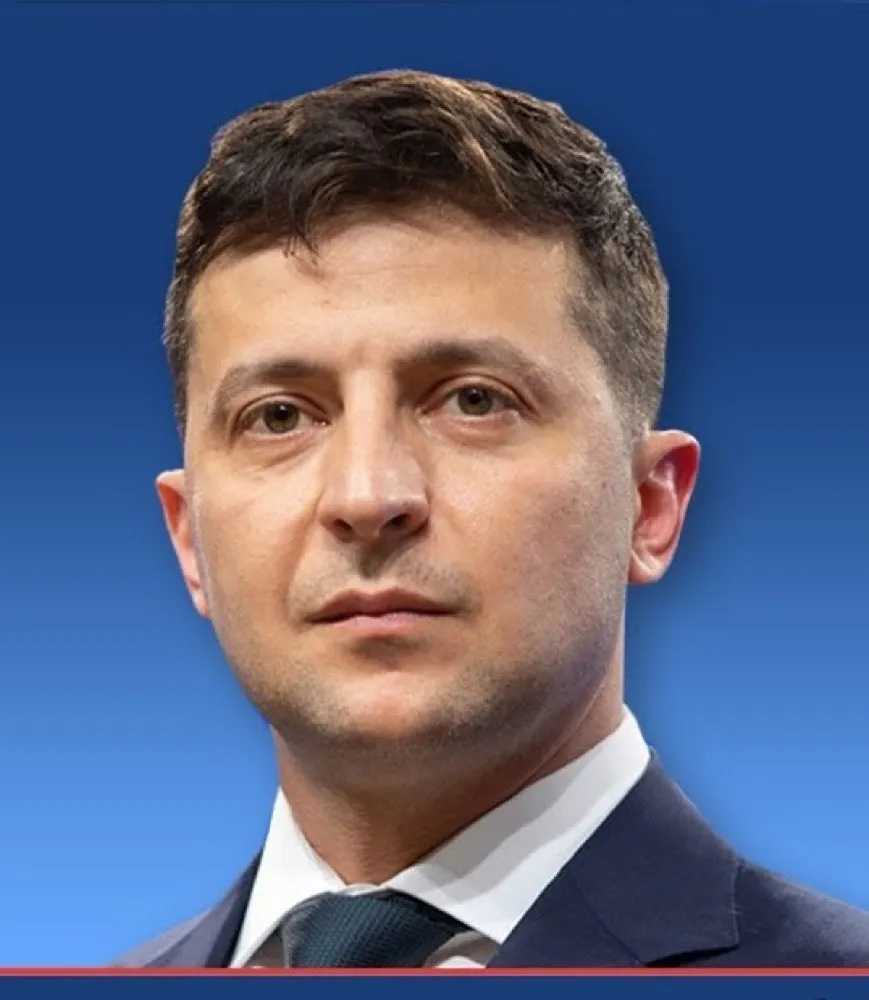
Watch Zelensky’s full address to Congress
Help me use the structure of "Your Money Is Not Charity" (Volodymyr Zelensky, 2022) in a work presentation.

The device: reframe the ask. In the speech, he renames a request from a cost into an investment and speaks to "you".

Audience: [your audience]
One message: [your one message]
Ask: [what you want them to do]

Restate my request as an investment, say what the audience gets back for it, and address them as "you" throughout.

Keep to my facts and my own plain voice. Do not quote or imitate the speaker.
48. Richer for Our Difference by Jacinda Ardern
“We are the richer for our difference, and poorer for our division.”
The line runs on antithesis, richer against poorer and difference against division; Ardern stepped down as prime minister eight months later.
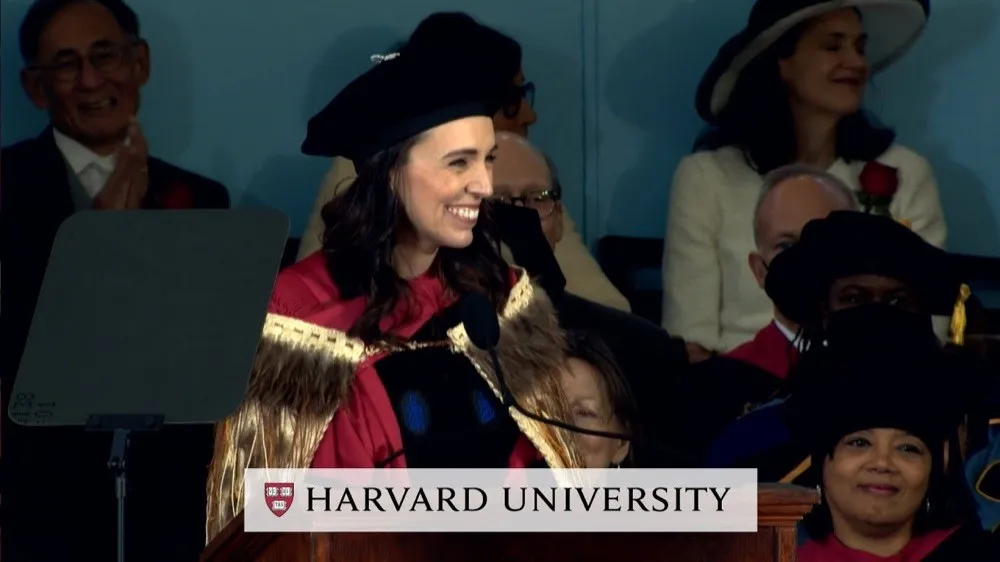
Watch Ardern’s full Harvard address
Help me use the structure of "Richer for Our Difference" (Jacinda Ardern, 2022) in a work presentation.

The device: antithesis. In the speech, two parallel halves set opposites against each other in one line.

Audience: [your audience]
One message: [your one message]
Ask: [what you want them to do]

Write three single-line options for my message built as two balanced halves that set opposites against each other.

Keep to my facts and my own plain voice. Do not quote or imitate the speaker.
49. Above All Else, Do Not Lie by Chimamanda Ngozi Adichie
“If I were asked the title of my address to you today, I would say, ‘Above all else, do not lie.’”
Adichie built her entire Class Day address around this one imperative and kept returning to it as a refrain.
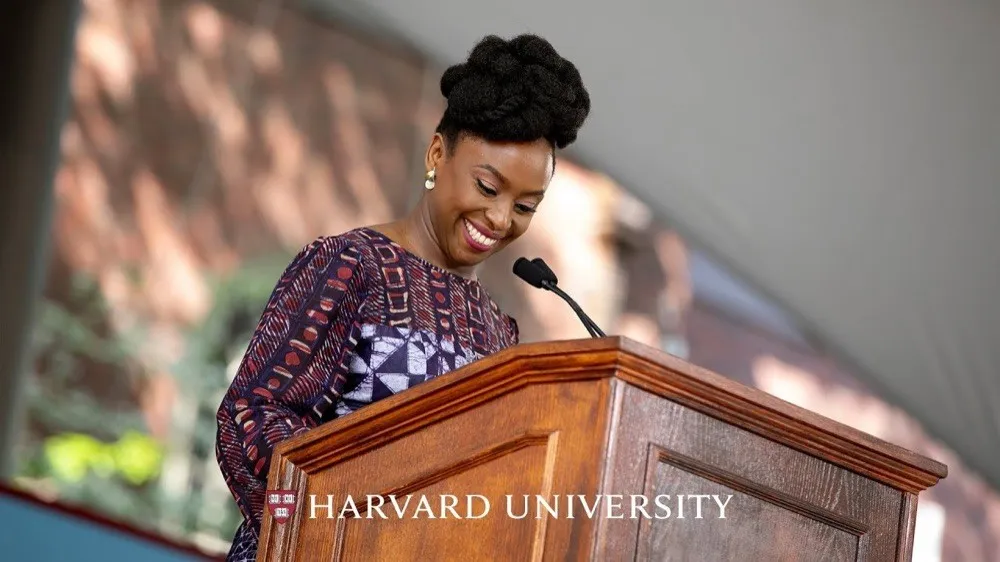
Watch Adichie’s full Harvard Class Day address
Help me use the structure of "Above All Else, Do Not Lie" (Chimamanda Ngozi Adichie, 2018) in a work presentation.

The device: the title as a refrain. In the speech, she gives her talk a one-line title, an imperative, and returns to it.

Audience: [your audience]
One message: [your one message]
Ask: [what you want them to do]

Give my talk a one-line title in the form of an instruction, and show three places to return to it.

Keep to my facts and my own plain voice. Do not quote or imitate the speaker.
50. Only 54% by Roger Federer
“In the 1,526 singles matches I played in my career, I won almost 80% of those matches. Now, I have a question for you: what percentage of the points do you think I won in those matches? Only 54%.”
That 54% is the number Federer wanted graduates to sit with: even a career win rate near 80% rests on points lost almost as often as won.

Watch Federer’s full Dartmouth address
Every one of these speeches, from Lincoln to Federer, still works as a source of inspiration and hope for anyone, whatever their background or ambition. Watch them, read them closely, and notice the deliberate choices that made each one land. Then borrow what works the next time you have a room to win over.
Help me use the structure of "Only 54%" (Roger Federer, 2024) in a work presentation.

The device: one surprising number. In the speech, he asks the audience to guess, then reveals one number that changes how they see success.

Audience: [your audience]
One message: [your one message]
Ask: [what you want them to do]

From the figures I give you, pick the one most likely to surprise this audience and write a question-then-reveal opening around it.

Keep to my facts and my own plain voice. Do not quote or imitate the speaker.
Use these speeches at work
Most of these speeches were given to crowds, parliaments and graduating classes. Their devices still work in a fifteen-minute update to senior management, as long as you use one at a time and keep the stakes honest.
Start with the device that fixes your current weak spot. If your opening is flat, borrow Federer’s question and number or Woolf’s observed scene. If your ask gets lost, borrow Gandhi’s pledge or Zelensky’s reframe. If people forget your message, borrow the repeated line from King or Thunberg. Then rehearse it out loud, because a device that reads well on the page can sound forced in a meeting room.
For delivery, from pausing to eye contact to handling questions, read our 12 public speaking tips for presenting at work. If you would like your team to practise these devices with a trainer, our public speaking course is run in-house and built around the presentations they give at work.
Frequently asked questions
What makes a speech persuasive?
Persuasive speeches tend to share a few techniques: a repeated core line (anaphora), ideas set in contrast (antithesis), direct address to the audience, one concrete number or image rather than a vague claim, and a personal story before the argument. Most of the fifty speeches above use several at once.
What is the most famous persuasive speech?
Martin Luther King Jr’s “I Have a Dream” (1963) is the most widely cited, built on the repetition of a single phrase. Other perennial choices include Lincoln’s Gettysburg Address, Churchill’s “Their Finest Hour”, and Kennedy’s inaugural address.
What are common persuasive techniques used in speeches?
The recurring ones are anaphora (repetition), antithesis (contrast), direct address, concrete evidence in place of abstraction, rhetorical questions, and storytelling. Naming and practising these is faster than trying to copy a whole speech.
How can I make my own presentation more persuasive?
Pick one idea and repeat it, swap a vague claim for a specific number or image, speak to “you” rather than “people”, and open with a short story rather than your thesis. Our presentation skills training drills exactly these habits. Our Power Presentations with AI course also covers using AI to draft a persuasive presentation.
Can I use AI to write a speech in the style of a famous speaker?
You can ask an AI assistant to explain a speech’s structure, such as a repeated line or a question followed by a surprising number, and apply it to your own content. That works better at work than imitating a speaker’s voice, which tends to sound out of place in a meeting room. Use the prompts in this article, fill in your own audience and message, and check every fact in the draft.
Image credits
Historical photographs are in the public domain, sourced via Wikimedia Commons. Licensed images, all via Wikimedia Commons: Audre Lorde by K. Kendall (CC BY 2.0); James Baldwin by R.L. Oliver, Los Angeles Times Photographic Collection, UCLA Library (CC BY 4.0); Mother Teresa by Manfredo Ferrari (CC BY-SA 4.0); Harvey Milk by Daniel Nicoletta (CC BY-SA 3.0); Aung San Suu Kyi by Htoo Tay Zar (CC BY-SA 3.0); David Foster Wallace by Steve Rhodes (CC BY 2.0); Barack Obama by Pete Souza, Obama-Biden Transition Project (CC BY 3.0); Toni Morrison by Angela Radulescu (CC BY-SA 2.0); Malala Yousafzai by Simon Davis, DFID (CC BY 2.0).
Cite this article: Kai Xin Koh. 50 Famous Persuasive Speeches You Need to Hear. HighSpark, 2019. https://highspark.co/blogs/famous-persuasive-speeches
Ready to put this into practice?
HighSpark's training programmes, trusted by 15,000+ professionals.
Explore Training