

Mixed-Function Teams
Staff from different departments who have tried AI tools and want a shared, practical standard.
 Case study Refreshing Gupshup’s narrative for an AI-led communications market Learn more
 Case study Crafting a distinct brand identity for ChatAndBuild in an evolving AI landscape Learn more
 Case study Simplifying Prudential’s participating funds through storytelling Learn more
Not sure where to start?
 Featured service Corporate Training Learn more
 Featured course Business Storytelling Learn more
 Featured course B2B Sales Pitch Learn more
 Featured course Power Presentations with AI Learn more
 Featured course Team Building Learn more
“One of the most brilliant things is that you work on your actual, not hypothetical story, so you can immediately see the impact (of the course)” Irina, Marketing Director at Rapyd
“My stories now have more impact and the attention is on me. I feel naturally more confident and enthusiastic when presenting now.” Kenneth Low, Senior Manager, Manulife Singapore
“I had no proper sales process. The coaching has helped me close a $15,000 PR project in my first month and a half with them.” Christel Goh, Founder, Grow PR
“The skills the participants have taken away are outstanding!” Sam Lambooy, Education Manager at Abbott
“Our team was thoroughly impressed by the trainer’s positive energy and responsiveness during and before the event.” Han Li, Former Regional Marketing Manager, Universal Robots
AI AT WORK
A hands-on AI workshop for teams who already use AI and want better, safer and more repeatable results on real work. You apply AI in the workplace to your own tasks, not demo examples.





Trusted by teams in best-in-class organisations





Facing issues such as:
Know how an AI tool is put together, so you can choose the right setup instead of only rewording prompts.
Use a four-part prompt and add the one detail only you know, so output reflects your context.
Check data and AI output before you build on it, and turn a repeated task into a reusable skill your colleagues can run.
Staff from different departments who have tried AI tools and want a shared, practical standard.
People who want their team to produce checked, repeatable work with AI instead of one-off experiments.
Teams rolling out AI skills across a company who need a hands-on session that goes beyond an introduction.
Workshop Agenda
Each session follows the same rhythm: a short explanation of the idea, a hands-on task on your own laptop, then a debrief. You attempt tasks your own way first, see where they break, then apply a method that fixes them. Exercises use fictional or non-confidential material, so nobody needs to share company data. Before the course we ask which tasks your teams handle, so the exercises match their work. We update the content before every run as the tools change.
Format
Course Duration
What to Bring
Tools we cover: Claude, ChatGPT, Microsoft Copilot and Gemini.
The half day is about four hours of hands-on work in your own AI tool, with one 15-minute break; timings are approximate. Full-day and 2-day runs follow the same six modules with more time for the capstone.
Talk and Discussion
Talk and Demo
Hands-on
Talk
Hands-on
Talk and Demo
Hands-on
Talk and Demo
Hands-on
Wrap-Up
Contact Us for Pricing
Request a QuoteThe workshop's data exercise and capstone, shown on a fictional monthly sales report. Every step works in whichever AI assistant your company approves.
A participant pastes last month's sales export into their AI tool and asks for insights. The answer reads well, but it rests on data nobody checked.
The practice dataset has planted errors: duplicates, a wrong total and odd values. The method starts by asking the AI to find them, then confirming each one.
Only on clean data does the AI summarise the month and propose insights, with a simple dashboard kept private.
A four-part prompt (who, what, with what and how) turns the insights into a short update for the participant's manager.
The whole sequence is saved as a skill, so next month's report runs the same checks in the same order, whoever runs it.
Our programmes are led by facilitators that bring real, practical industry experience so you get the best outcomes.
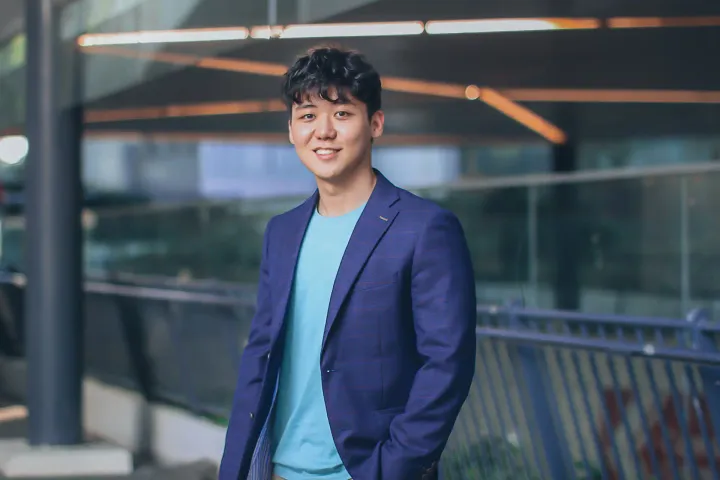
Managing Director, HighSpark
Forbes30U30 Asia Alum, seen on CNA, Inc, Business Insider. He's helped clients raise over US$480M in funding. Highly sought after advisor to C-Suites from firms like Nike, Prudential, Oracle.
A half day of about four hours, a full day or 2 days, as a live workshop on your own laptops. The longer formats add time for the capstone workflow.
Fees depend on format, group size and tailoring, and certificates are available on request upon successful completion. Cost, data and funding answers for every AI course are in the Generative AI courses FAQ.
Fill out the brief form and we'll get back to you with an estimate and discuss a plan for your company.
We'll arrange your meeting with a consultant to:

Our flagship business storytelling training workshop enables teams to utilise narratives to drive business and team goals.

Equip teams to design clear, compelling visuals that sharpen messages and help audiences grasp ideas quickly and confidently.

Helps professionals turn complex data into clear, persuasive stories that support insight-driven decision-making.
Schedule a free call with our consultants to help you figure out which corporate training course best fits your organisational requirements.
Get in Touch